Prediction Market Regulation Faces a New Court Test
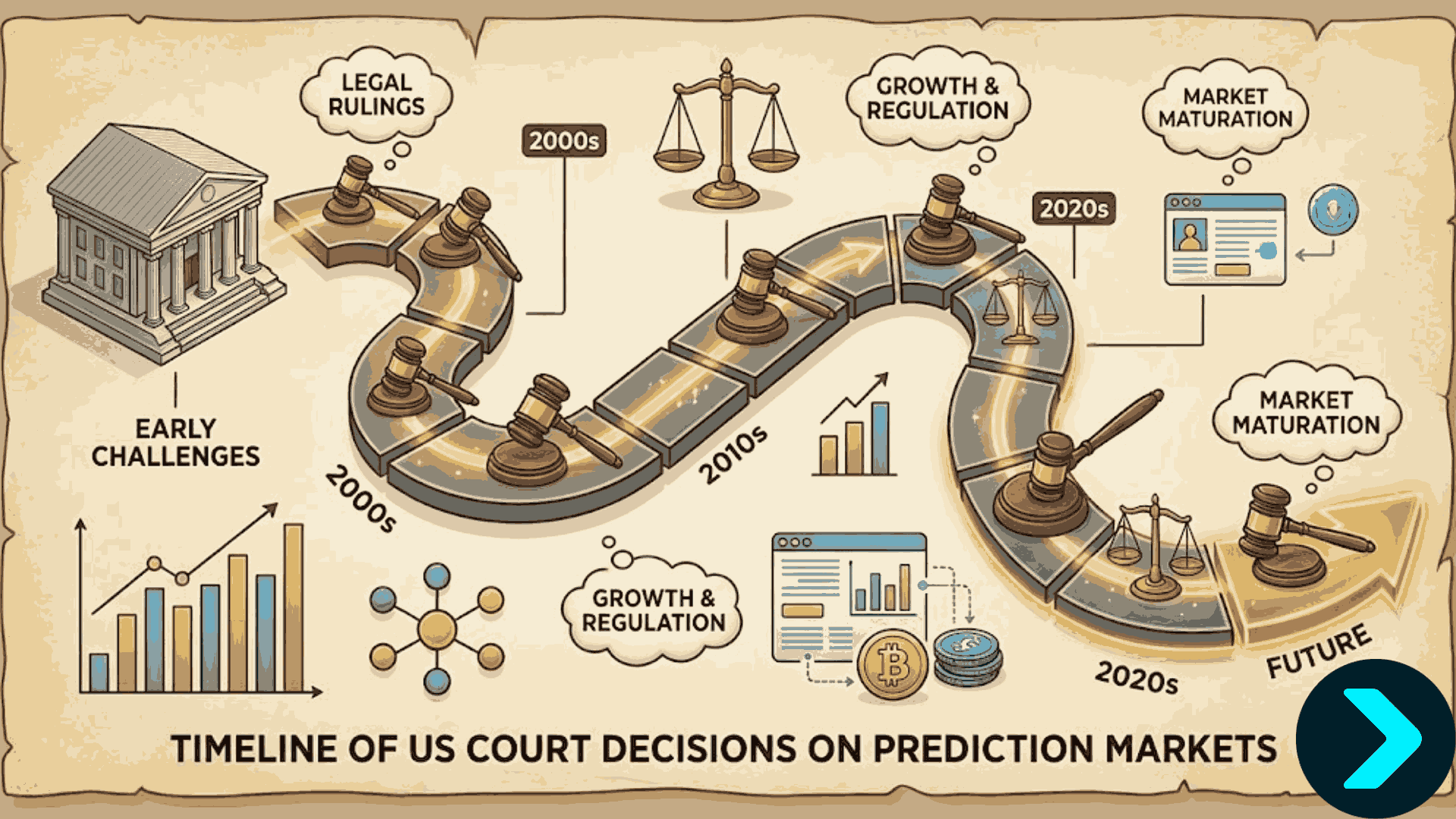
You need clear rules before you put money behind event contracts, and prediction market regulation is anything but clear right now. A New York federal judge has pressed the Commodity Futures Trading Commission on whether it truly has exclusive authority over these products, according to GamblingNews. That question matters because platforms such as Kalshi have pushed event contracts into areas that look a lot like sports betting to state regulators. The CFTC sees federally listed contracts. States see gambling products entering through a side door. Traders, operators, affiliates, and compliance teams are stuck in the middle.
The timing is sharp. Prediction markets have moved from political curiosities to real-money products with mainstream reach. If courts side with broad federal control, state gaming agencies may lose room to act. If courts reject that view, platforms could face a patchwork of state-by-state enforcement.
What Matters Now
- The central fight is jurisdiction. The CFTC says federally regulated event contracts fall under its authority, but states argue some contracts function like wagers.
- Sports markets are the pressure point. Political and economic contracts were controversial enough. Sports contracts bring gaming law into the room fast.
- The judge’s questions signal real doubt. A court does not have to reject the CFTC outright to narrow its position.
- Operators need a state-law plan. Federal registration alone may not protect a business from state gambling scrutiny.
Why Prediction Market Regulation Is Back in Court
The case reported by GamblingNews centers on a basic but thorny issue: who gets the final say over prediction markets that trade on real-world outcomes? The CFTC regulates derivatives markets under federal commodities law. State gaming regulators police betting within their borders. Event contracts sit awkwardly between those two regimes.
That awkward fit is the whole problem.
Kalshi and similar platforms argue that their products are regulated financial contracts listed on a CFTC-supervised exchange. Critics counter that a contract tied to a game result can be economically hard to separate from a sports bet, even if the legal wrapper is different. What should matter more, the label on the product or how customers use it?
A federal market label does not erase every state gambling question. That is the uncomfortable point now sitting in front of the court.
I have covered gambling regulation long enough to know that agencies rarely surrender turf quietly. The CFTC has an interest in keeping federally listed contracts under one national framework. State regulators have an equally clear interest in protecting licensed betting markets, tax systems, consumer safeguards, and responsible gambling rules.
Prediction Market Regulation and the CFTC’s Authority Claim
The CFTC’s position depends on federal preemption. In plain English, that means federal law can override state law when Congress has given a federal agency control over a specific area. The agency’s strongest argument is that derivatives markets need national consistency. A futures contract cannot work well if each state can block, rewrite, or punish it differently.
That argument has force. Financial markets rely on uniform rules, central clearing, and predictable oversight. If every state could make its own call on listed contracts, the market could become a compliance sinkhole.
But there is a catch. Gambling law has long been state-led. Sports betting, casino gaming, horse racing, fantasy sports, sweepstakes, and lottery products all sit inside dense state rulebooks. Courts tend to ask whether Congress clearly intended to push states aside. If the answer is fuzzy, state authority can survive.
What the judge appeared to be testing
Based on the GamblingNews report, the judge’s questions focused on whether the CFTC can claim exclusive control in a way that blocks state enforcement. That is a serious line of inquiry. Judges often use these hearings to stress-test the practical limits of an agency’s theory.
- Can a CFTC-regulated platform offer event contracts tied to sports without a state gaming license?
- Does federal commodities law treat those contracts as financial products regardless of subject matter?
- Can a state act if it believes the same product is illegal gambling under local law?
- Where does consumer protection sit if federal and state rules point in different directions?
Those are not academic questions. They decide market access, advertising rules, payment processing, affiliate exposure, and enforcement risk.
Why Sports Contracts Change the Stakes
Prediction markets tied to elections already raised public policy concerns. Sports contracts add a different kind of heat because states have spent years building regulated betting systems after the 2018 Supreme Court decision in Murphy v. NCAA. That ruling opened the door for states to legalize sports betting. It did not create one national sports betting market.
Now prediction market operators are testing a parallel path. Instead of taking a sportsbook model to each state, they can argue that event contracts belong under federal derivatives law. For regulators in New York, Nevada, New Jersey, and other major gaming states, that looks like a flank attack.
Think of it like zoning. If you build a restaurant, you may have a federal tax ID and follow federal labor rules, but the city still cares about permits, fire exits, and where alcohol can be served. Prediction markets may be federally supervised, but states are asking whether local gambling rules still apply.
What This Means for Operators and Affiliates
Here’s the thing: compliance teams should not wait for a final ruling before tightening their review process. Court fights can take months, and emergency orders can shift the ground overnight. If your business touches prediction markets, you need a practical risk map now.
- Separate product types. Political, economic, entertainment, and sports contracts may not carry the same legal risk.
- Track state enforcement signals. Cease-and-desist letters, regulator statements, and attorney general actions can matter before a final judgment arrives.
- Review marketing language. Calling a contract a bet, parlay, lock, or odds boost can undercut a financial-market argument.
- Check payment and KYC controls. Age gates, geolocation, sanctions screening, and fraud controls may become evidence of good faith.
- Build a state-by-state matrix. A federal license or designation may not answer every state question.
Affiliates should be extra careful. Promoting prediction markets like sportsbooks can create regulatory risk even if the platform insists it is not gambling. If copy, banners, or influencer scripts blur that line, regulators may not be amused.
Prediction Market Regulation Is Also a Consumer Trust Issue
Regulators are fighting over authority, but consumers care about simpler things. Can they withdraw funds? Are markets fair? Who handles disputes? What happens if a contract is halted or voided?
The CFTC framework answers some of those questions through exchange rules, surveillance, and clearing requirements. State gambling law answers others through licensing, responsible gambling tools, advertising limits, and complaint channels. Neither side has a perfect claim to moral superiority here.
Honestly, that is why the court’s scrutiny matters. A rushed win for either side could leave gaps. If federal law sweeps too broadly, state consumer protections may be weakened. If state regulators can block federally listed contracts too freely, the market may become too fragmented to function.
The Next Move to Watch
The judge’s questions do not decide the case by themselves. Still, they show that the court is not treating the CFTC’s authority claim as automatic. That alone should get the industry’s attention.
For now, the smartest move is boring and useful: document your legal basis, monitor every relevant state, and avoid marketing that makes an event contract look like a sportsbook product in different clothes (regulators read ads too).
The larger fight is about whether prediction markets become a nationally regulated financial product, a state-policed gambling product, or something messier in between. My bet? The messy middle is where this lands first.