Brazil Betting Taxes Face Fresh Scrutiny From Finance Minister
If you operate, invest in, or supply Brazil’s betting market, tax policy is no longer background noise. Brazil betting taxes are back under political pressure after finance minister Fernando Haddad raised concerns about how much revenue the sector is returning to the state, according to iGaming Business. That matters now because Brazil’s regulated fixed-odds betting market is still young, expensive to enter, and closely watched by lawmakers who remain uneasy about gambling harm, advertising, and money flows. A tax rethink would not be a small accounting change. It could affect licence economics, bonus strategy, affiliate spend, pricing, and whether offshore brands still see Brazil as worth the compliance cost. The market has size. The question is whether Brasília thinks it is getting enough back.
What Operators Should Watch
- Finance minister Fernando Haddad has signalled fresh concern over betting tax returns.
- Brazil already has a formal federal regime for licensed fixed-odds betting operators.
- Higher taxes could push margins down and make bonus-heavy acquisition harder.
- The main policy risk is not one number. It is the mix of tax, enforcement, advertising rules, and consumer protection.
- Licensed operators need stronger scenario planning before the market settles.
Why Brazil Betting Taxes Are Under Pressure
Brazil’s regulated betting market opened with high expectations. The country has a large population, a football culture that drives betting activity, and years of pent-up demand from companies that had operated from offshore bases.
But governments do not regulate betting only to create a legal market. They also want tax revenue, oversight, and public control. Haddad’s comments suggest the Ministry of Finance is watching whether the new framework is doing enough on the revenue side.
Brazil’s betting debate is moving from legalisation to yield. That is a very different conversation for operators.
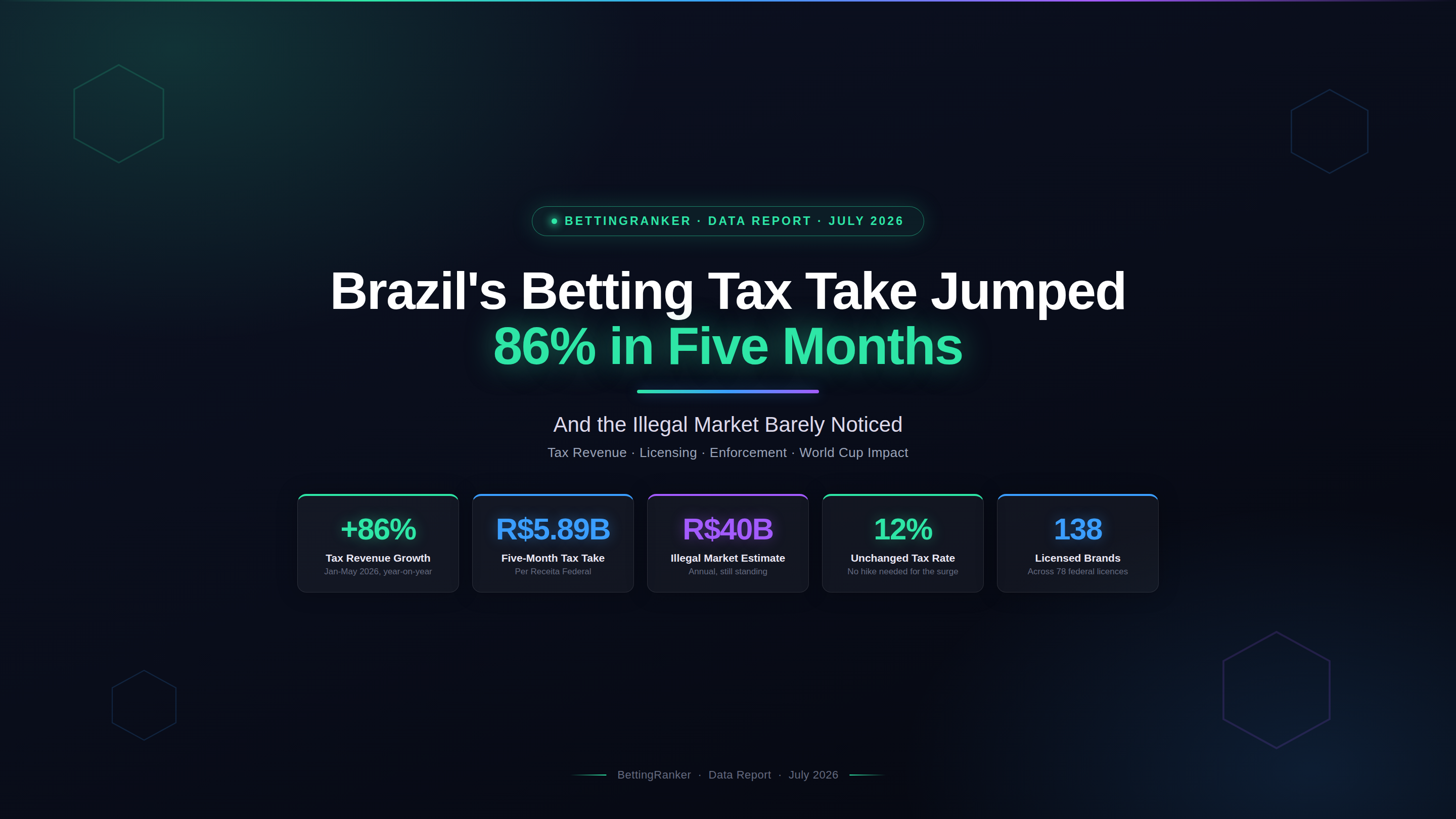
The current federal model includes taxation on operator revenue, licence fees, and taxation tied to player winnings. Licensed companies also face compliance costs around responsible gambling, payments, reporting, know-your-customer checks, and anti-money laundering controls.
Here’s the thing. A betting market can look huge in handle terms, yet still produce less taxable margin than politicians expect. Turnover is not profit. Promotional credits, odds competition, payment costs, fraud control, platform fees, sports rights, and affiliates all bite before anyone counts tax.
Brazil Betting Taxes And The Cost Of Playing By The Rules
Brazil’s regulated model asks operators to make a serious upfront commitment. A federal licence has been priced at BRL30 million for a five-year term, and authorised companies must meet technical and local requirements set through the Ministry of Finance and its betting secretariat.
That is before media, sponsorship, customer support, data hosting, integrity tools, and payments. For a global operator, Brazil may still be attractive. For a smaller brand, the maths can turn nasty fast.
Tax is only one ingredient in the stew.
Think of it like running a restaurant. If rent goes up, a good chef can adjust. If rent, wages, supplier costs, and card fees rise at the same time, the menu changes. Betting works the same way. Operators can absorb some pressure, but not all of it without changing odds, promotions, or market focus.
Where pressure shows up first
- Bonuses: Free bets and welcome offers become harder to justify when tax takes a larger share of net gaming revenue.
- Affiliate deals: Revenue-share contracts may be tightened, especially for low-value or bonus-driven traffic.
- Odds pricing: Operators may trim value for players if margins come under strain.
- Product range: Lower-margin sports or niche markets may receive less attention.
- Compliance budgets: Stronger reporting demands mean more spending on systems and staff.
Could Higher Brazil Betting Taxes Backfire?
Yes, if the rise is sharp or poorly timed. Brazil is trying to pull players into licensed channels. If legal operators become too expensive, weaker odds and reduced promotions can push some bettors back toward unlicensed sites.
That is the policy trap. Raise tax too little, and politicians complain the state is underpaid. Raise it too much, and the legal market loses ground to black-market operators that pay nothing, ignore local rules, and often offer fewer safeguards.
What is the right rate? There is no magic figure. Mature markets such as the UK, Italy, Denmark, and Spain show that gambling tax policy works best when it is paired with strict enforcement against illegal supply. Tax rates alone do not clean up a market.
Brazil has another issue. The market is still forming. Operators are still learning customer behaviour, churn, payment preferences, and local sports calendars. Changing the tax load too soon could distort investment decisions before regulators have a clean data set.
What Haddad’s Comments Mean For Licensed Operators
Haddad’s intervention should be read as a political signal, not a final tax bill. Still, operators would be foolish to ignore it. Finance ministries tend to return to sectors that look cash-rich, especially when budget pressure rises.
Licensed betting companies should prepare for three possible paths:
- No immediate rate change: The government watches early market data and focuses on enforcement.
- Targeted adjustment: Brazil tweaks deductions, prize taxation, reporting rules, or licence conditions rather than headline tax rates.
- Broader tax increase: The government pushes for a larger share of operator revenue if collections disappoint.
The smartest operators will not wait for Brasília to decide. They will model each path now, with clear assumptions for tax, bonus cost, payment approval rates, and affiliate commissions.
A practical checklist for operators
- Audit your Brazil unit economics by channel, not just at brand level.
- Separate organic, paid media, influencer, and affiliate acquisition costs.
- Stress-test your bonus policy against higher effective tax rates.
- Track player value after tax and compliance cost, not just deposits.
- Prepare investor messaging that explains market risk without sounding defensive.
Brazil Betting Taxes Are Also A Trust Test
The betting sector often argues that regulation brings jobs, sponsorship, safer gambling tools, and tax income. Fine. But that argument only works if the public can see a fair exchange.
Brazilian lawmakers are already sensitive to advertising saturation and household spending concerns. If tax receipts look thin while betting brands dominate sports broadcasts, critics will have an easy attack line. Why should operators get market access if the public return looks weak?
Operators need to be more direct here. Publishing clearer data on responsible gambling investment, local employment, integrity monitoring, and tax paid would help. Not glossy brand talk. Numbers.
Honestly, the sector has spent years asking governments for legal certainty. In Brazil, that certainty now comes with a heavier burden of proof.
The Next Move In Brazil’s Betting Market
Brazil is too large for serious operators to abandon over a single ministerial warning. But the tone has shifted. The early rush for licences is giving way to a tougher phase where margins, compliance, and politics all collide.
If you are exposed to Brazil, treat tax policy as a live operating risk. Review your assumptions, protect your compliance posture, and avoid building a strategy that only works under perfect conditions. Brasília is watching the scoreboard, and it may decide the state needs a bigger share before the season is over.