Unregulated Online Gambling Market Hits $5.9 Trillion
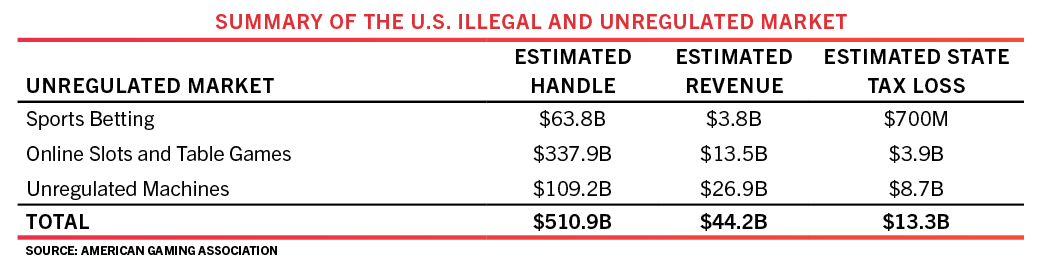
If you work in betting, compliance, payments, or player protection, this number should stop you cold. A new estimate says the unregulated online gambling market handles about $5.9 trillion in annual turnover. That matters because traffic, money, and customer attention are still flowing to sites outside licensed systems, even as many governments tighten rules and expand legal betting options.
For operators, this is a revenue leak and a trust problem. For regulators, it is proof that licensing alone does not shut out black-market brands. And for players, it raises familiar risks around unpaid winnings, weak identity checks, and poor safeguards. The figure comes from the Global Gambling Compliance report covered by GamblingNews, and while turnover is not the same as gross gaming revenue, the scale is hard to ignore. So what is actually driving this market?
What stands out
- The reported $5.9 trillion figure refers to annual turnover, not operator profit.
- Black-market gambling keeps growing where legal products are slow, limited, or hard to use.
- Payment access, weak enforcement, and aggressive affiliate traffic all help unlicensed sites compete.
- Licensed operators face a hard truth. Regulation that frustrates users can push them elsewhere.
What the unregulated online gambling market figure really means
Big numbers in gambling often get blurred. Here, the first thing to understand is the difference between turnover and revenue. Turnover is the total amount wagered. Gross gaming revenue, or GGR, is what operators keep after paying out winnings.
That distinction matters because $5.9 trillion can sound inflated if you read it as operator income. It is still an enormous figure. Think of it like a busy airport counting every passenger movement, not just the ticket profit. The traffic itself tells you how active the system is.
Licensed markets are not only competing with each other. They are competing with faster, looser, and often less accountable alternatives.
And that is the real point. The unregulated online gambling market is not some fringe corner of the internet. It appears to be a parallel system with massive transaction volume.
Why players still choose unlicensed sites
Look, people do not flock to unregulated platforms by accident. In many markets, those sites offer fewer friction points. Sign-up is quick. Limits are lighter. Product range is broader. Some accept crypto, offshore e-wallets, or payment methods that licensed operators cannot touch under local rules.
That convenience can outweigh the risk in a customer’s mind, especially when a legal site has heavy verification steps, product restrictions, bonus limits, or blocked payment rails. Is that wise? No. Is it predictable? Absolutely.
Here are the most common reasons black-market sites keep pulling users in:
- Faster registration and fewer identity checks at the start.
- Access to banned or restricted products, including certain casino games and higher-stakes betting.
- Bonuses and VIP deals that licensed brands cannot legally match.
- More payment options, including some crypto channels.
- Constant traffic from affiliates, mirror sites, and search positioning.
That last point gets less attention than it should. Affiliates and digital marketers often act as the plumbing for offshore acquisition. If regulators ignore that layer, they are leaving the front door open.
Where regulation helps, and where it backfires
Strong regulation has value. It supports age checks, anti-money laundering controls, dispute handling, and safer gambling tools. But bad regulation can become self-defeating. If legal products are too slow, too narrow, or too difficult to access, users do what consumers usually do. They shop elsewhere.
This is where the debate gets messy. Some policymakers treat channelization, the share of players using licensed options, as a box-checking exercise. It is not. It is the whole match. If the legal market does not offer a solid user experience, black-market sites gain ground.
Honestly, this should not be controversial. A regulated market only works when it can attract real players at scale. That means rules need teeth, but they also need realism.
How the unregulated online gambling market hurts licensed operators
The direct damage is obvious. Unlicensed sites siphon off deposits, betting volume, and customer lifetime value. But the second-order effects are just as serious.
Licensed operators spend heavily on compliance, taxes, responsible gambling controls, and local partnerships. Offshore rivals often skip those costs. That distorts competition in a way any veteran industry reporter has seen before, whether in gambling, media piracy, or gray-market finance.
One sentence says it all.
Legal brands are being asked to play by strict rules while illegal rivals often run a different race entirely.
That gap can affect:
- Marketing efficiency and acquisition costs
- Retention rates for high-value players
- Market share in newly regulated jurisdictions
- Confidence in regulatory models
- Tax receipts that governments expect from legal gambling
What regulators and operators should do next
There is no magic fix, and anyone selling one is oversimplifying the problem. But some steps are clearly more useful than others.
1. Improve channelization, not just enforcement
Blocking domains and issuing warnings matter. They are not enough on their own. Legal products need to be usable, competitive, and visible. If the licensed offer feels clunky, users will keep slipping away.
2. Target payments and affiliate pipelines
Money movement is the heartbeat of offshore gambling. Payment blocking, bank cooperation, and pressure on processors can slow that flow. The same goes for affiliate networks that send traffic to unlicensed brands (often while pretending to offer neutral reviews).
3. Make consumer education less bland
Most player warnings are easy to ignore because they read like legal copy. Show practical risks instead. Delayed payouts. No dispute path. Weak data protection. Confusing bonus terms. That lands better than generic caution.
4. Share better market data
The industry needs clearer methods for estimating offshore activity. That includes traffic analysis, payment data, search trends, and enforcement outcomes. Without stronger evidence, policy debates turn into guessing contests.
What this report signals for the wider gambling sector
The $5.9 trillion estimate should not be read as a neat final answer. It should be read as a warning flare. Even if the true number moves up or down with methodology, the underlying message is the same. The unregulated online gambling market is large, persistent, and highly adaptive.
That should push operators, regulators, and suppliers to ask harder questions. Are current rules channeling users into safer environments, or nudging them away? Are payment controls keeping pace with offshore tactics? Are affiliates being policed seriously enough?
Here’s the thing. This fight is less like flipping a switch and more like patching a leaky roof during a storm. Ignore one opening, and water finds another.
The next real test
The headline number will grab attention, as it should. But the sharper issue is whether licensed markets can win on both safety and usability. If they cannot, offshore operators will keep filling the gaps, and reports like this one will keep getting bigger.
The next few years will show whether regulators want a legal market that merely exists, or one that actually competes.