Lottomatica Q1 Growth Shows Online Betting Momentum
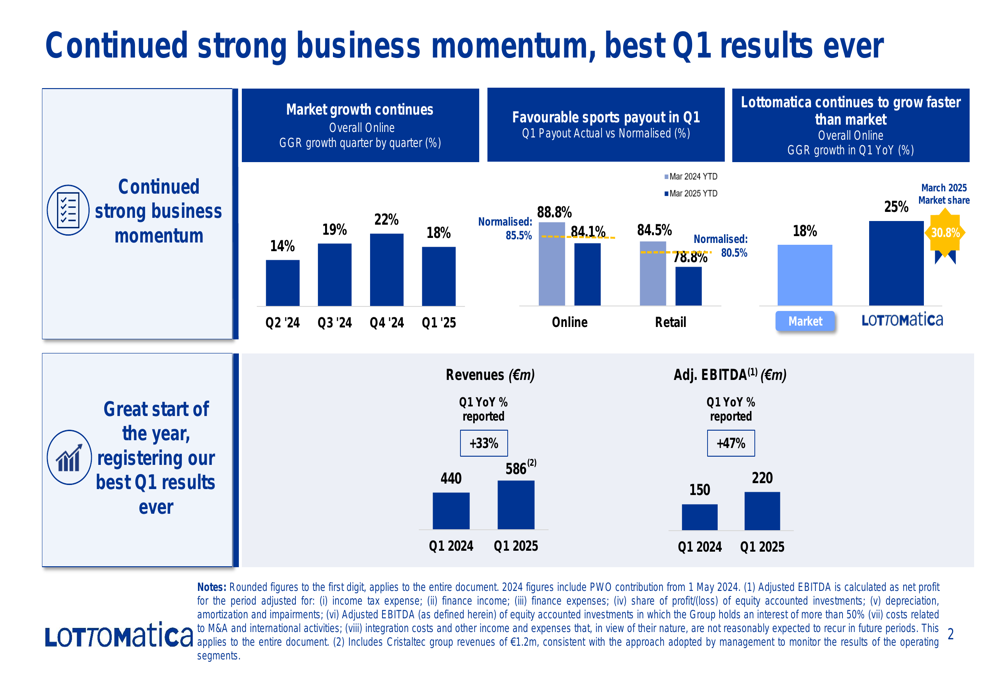
If you track Italy’s gambling market, you know the real question is no longer whether digital channels are growing. It is who is turning that shift into durable earnings. Lottomatica Q1 growth matters because it offers a clean read on that trend. The group posted steady first-quarter performance, with online betting and gaming doing much of the heavy lifting, while its wider business stayed stable enough to support margins and cash generation.
That matters to you if you watch operator strategy, M&A, or market share in regulated gambling. A quarter like this can tell you more than a splashy product launch ever will. It shows where player demand is moving, how well an operator is executing, and whether management’s digital pitch holds up once the numbers land.
What stands out
- Lottomatica Q1 growth was supported by continued online momentum.
- Management pointed to solid execution across betting and gaming channels.
- The results reinforce how central digital revenue has become in Italy.
- Steady quarterly numbers matter because they suggest discipline, not a one-off spike.
Why Lottomatica Q1 growth matters
Lottomatica is not a fringe name chasing attention. It is one of the biggest operators in Italy, so its results often act like a market weather vane. When online rises here, the signal carries weight.
And this quarter’s signal looks pretty plain. Online is still pushing ahead, while the broader business appears stable enough to keep the group on course. That mix matters. Fast digital growth is useful, but only if the rest of the company does not wobble underneath it.
Think of it like a football club with a hot striker. Goals help, sure, but the table position holds only if the back line stays organized.
Lottomatica Q1 growth and the online channel
The headline takeaway from the report covered by iGaming Business is straightforward. Online kept moving. That is in line with a wider pattern across regulated European gambling markets, where mobile use, cross-sell, and improved product design keep pulling customers toward digital play.
Look, this is where the industry hype usually gets out of hand. Every operator wants to call itself a tech story. But revenue quality is what counts. If online betting and gaming are adding repeatable volume, holding customers, and lifting profitability, that is more persuasive than any polished investor deck.
Online growth is most convincing when it shows up as steady execution, not just a flashy quarter.
Lottomatica’s update suggests exactly that kind of pattern. Not drama. Not noise. Just a business benefiting from structural demand that still has room to run.
What investors and industry watchers should watch next
If you want to judge whether Lottomatica Q1 growth has staying power, a few signals matter more than the headline number itself. Some are obvious. Others get missed.
- Online revenue mix. Is digital becoming a larger share of total group revenue over time?
- Margin quality. Are earnings improving because of better operating leverage, or just temporary tailwinds?
- Player retention. Growth built on acquisition alone gets expensive fast.
- Italy market conditions. Regulation, taxes, and consumer spending can all change the pace.
- Cross-channel execution. Retail and online work best together when one feeds the other.
Here’s the thing. A lot of gambling coverage treats every quarterly update like a verdict. It is better to read these numbers as evidence in a longer case. One solid quarter does not settle everything, but it can confirm that management is operating from a sound playbook.
How this fits the wider Italy gambling market
Italy remains one of Europe’s most watched regulated gambling markets, partly because scale and regulation collide here in interesting ways. Big operators can win if they manage compliance, product, and marketing with discipline. Smaller groups often struggle to keep up.
That is why Lottomatica’s performance deserves attention beyond its own shareholder base. If a major incumbent keeps building online momentum while staying steady elsewhere, it raises the pressure on rivals. Can they match the product pace? Can they protect margin? Can they keep users from drifting toward larger brands?
That pressure is real.
And it tends to widen the gap between operators with serious digital infrastructure and those still pretending a legacy footprint is enough. In gambling, as in payments or media, channel shift can look gradual until it suddenly feels non-negotiable.
What the quarter says about management execution
Strong operators rarely win because of one big idea. They win because they repeat the basics with very little slippage. Product. Marketing efficiency. Trading discipline. Customer lifecycle work. Cost control.
Lottomatica’s steady first quarter points in that direction (at least from the information available in the report). That should interest you if you care less about slogans and more about operational proof. Anyone can promise growth. Fewer teams can produce it while keeping the larger business in line.
Honestly, that is often the clearest marker of quality in this sector.
The practical takeaway for operators and affiliates
If you work around betting and gaming, this result offers a simple lesson. Digital growth still rewards operators that can pair scale with execution. That means faster product cycles, sharper CRM, stronger mobile experiences, and cleaner use of customer data within regulated limits.
- Operators should test whether online gains are improving lifetime value, not just sign-up volume.
- Affiliates should watch which brands are converting steady demand into repeat play.
- Suppliers should note where product depth is helping major brands hold attention.
Why does that matter now? Because market leadership is getting harder to fake. In a mature regulated market, the numbers usually expose who has real traction and who is burning cash to look busy.
Where the story goes from here
Lottomatica’s first quarter does not scream. It does something better. It suggests a business with online momentum and enough balance to keep that momentum useful. That is the kind of update seasoned market watchers tend to trust.
The next question is whether this pace holds through the year as competition, regulation, and consumer behavior keep shifting. If online keeps carrying more of the load, rivals will need more than marketing spin to respond. They will need better execution. And in this market, that is the only argument that counts.