iGaming Affiliate Marketing Business Model Explained
If you are looking at the gambling sector from the outside, the iGaming affiliate marketing business model can seem simple. Send traffic to a casino or sportsbook, collect a fee, repeat. But founders who treat it like a basic lead generation play usually get a rude shock. Revenue depends on player quality, regulation, tracking accuracy, deal structure, and the operator’s own retention engine. Miss one of those pieces and your margins can thin out fast.
That matters now because customer acquisition costs keep rising, compliance pressure is heavier, and operators want affiliates that can deliver intent-driven traffic instead of cheap clicks. The upside is still real. Well-run affiliate businesses in iGaming can scale with lean teams and recurring revenue. The catch is that you need to understand what actually drives value, and what quietly destroys it.
What matters most
- Revenue is deal-driven. CPA, revenue share, and hybrid models each change your cash flow and risk profile.
- Traffic quality decides everything. High-volume traffic means little if users do not deposit, stay active, or meet compliance checks.
- Regulation is a growth constraint. Licensing rules, ad standards, and responsible gambling rules can cap expansion or kill channels.
- Tracking is non-negotiable. Weak attribution leads to payment disputes, bad optimization, and blind spending.
- Operator selection matters. A strong brand with poor retention can be less valuable than a smaller one with solid lifetime value.
How the iGaming affiliate marketing business model works
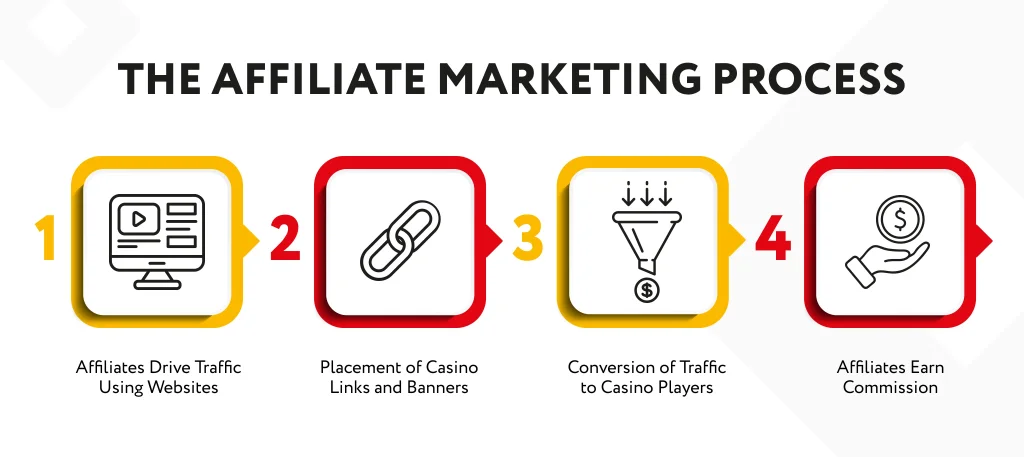
At its core, an affiliate publishes content, comparisons, reviews, odds pages, bonus guides, or paid traffic funnels that send users to an online casino, sportsbook, poker room, or bingo site. If that user signs up and meets the agreed conditions, the affiliate gets paid.
Simple on paper. Messy in practice.
The business works like a property broker crossed with a media company. You are building audience, trust, and search visibility on one side, while negotiating unit economics with operators on the other. Your real product is not traffic. It is qualified players.
Common commercial models
- CPA, or cost per acquisition. You get a fixed payment when a referred player registers, deposits, and sometimes wagers a minimum amount.
- Revenue share. You earn a percentage of the net gaming revenue generated by referred players over time.
- Hybrid deals. You get an upfront CPA plus a smaller ongoing revenue share.
Each model changes the business.
CPA can speed up cash flow, which early-stage founders love. Revenue share can create stronger long-term upside, especially if player lifetime value is high. Hybrid deals split the difference and often make sense when you want some near-term stability without giving up all future earnings.
Founders often obsess over traffic volume. The sharper question is this: what is a player worth after bonuses, churn, fraud checks, chargebacks, and regulation costs?
Why traffic quality beats raw scale in iGaming affiliate marketing
A lot of affiliate sectors reward broad traffic. iGaming does not. This market is harsher because operators judge you on conversion and player value, not vanity metrics.
A user who reads a detailed sportsbook comparison, understands the wagering rules, and deposits with clear intent is far more valuable than hundreds of untargeted visitors. And yes, operators know the difference.
What operators usually care about
- First-time deposit rate
- Average deposit size
- Retention and repeat play
- Bonus abuse and fraud rates
- Geographic compliance
- Channel source and promotional claims
Look, this is where many founders misread the market. They think affiliate growth is mostly an SEO game. SEO matters, of course, but it is only the front door. If your traffic does not convert into compliant, high-value users, the operator will cut terms, cap deals, or walk away.
Where founders make money, and where they get burned
The appeal of the model is obvious. You can build content assets, rank for high-intent searches, sign operator deals, and generate recurring income without running the gambling product yourself. That keeps overhead lower than building a full operator brand.
But the model has traps.
Upside founders like
- Lean operating model compared with running a licensed casino or sportsbook
- Ability to scale through SEO, content, paid media, or regional expansion
- Recurring revenue potential from revenue share agreements
- Diversification across brands, geographies, and product types
Risks founders underestimate
- Revenue volatility. Search rankings move, paid channels tighten, and seasonality hits hard in sports betting.
- Regulatory exposure. Marketing rules differ by market and change fast.
- Platform dependence. A Google update can hit like a sudden red card in extra time.
- Operator risk. Delayed payments, poor reporting, weak retention, or changing commission terms can erode margins.
- Attribution disputes. If tracking fails, good luck proving value after the fact.
One bad contract can wipe out months of good media buying.
How to choose the right iGaming affiliate marketing business model
The right setup depends on your capital, channel mix, and appetite for risk. Founders need to think in cash flow terms, not just top-line commission rates.
CPA works best when
You need faster payback, you run paid traffic, or you are testing new markets and want cleaner economics upfront. This model reduces long-tail uncertainty, though strong player cohorts can make it feel limiting later.
Revenue share works best when
You have solid organic traffic, patient capital, and confidence in the operator’s retention. If your referrals stick, this model can compound nicely over time. If they do not, the promise falls apart.
Hybrid deals work best when
You want to cover acquisition costs while keeping a slice of long-term value. For many serious affiliates, this is the practical middle ground.
Think of it like building a restaurant menu. Fast-selling items keep cash coming in, while higher-margin dishes make the business worth owning. You need both.
Compliance is part of the business model
Some founders treat compliance like legal housekeeping. That is a mistake. In iGaming, compliance shapes traffic strategy, content claims, geography targeting, and even which partners you can work with.
Rules vary by jurisdiction, but common pressure points include bonus promotion language, age restrictions, responsible gambling messaging, and restrictions on misleading claims. In the UK, for example, the Advertising Standards Authority and Gambling Commission have taken a hard line on gambling advertising standards. Other regulated markets apply their own licensing and ad controls.
And there is another layer. Search engines and ad platforms have their own policies, which may be stricter than local law.
A practical compliance checklist
- Review every market’s rules before launching content or campaigns
- Use clear bonus terms and avoid vague claims
- Verify age-gating and responsible gambling language
- Keep records of approved creatives and landing pages
- Audit affiliate links, redirects, and geo-targeting logic regularly
What strong operators look like from an affiliate’s side
Founders usually chase big brand names first. Fair enough. But a famous operator is not always the best commercial partner.
You want a partner with accurate reporting, reliable payments, fair clawback terms, and decent retention. A smaller operator with better player economics can beat a headline brand that churns users or plays games with attribution.
Questions worth asking before you sign
- How is net gaming revenue defined?
- Are there negative carryover terms?
- What are the exact CPA qualification rules?
- How often are reports updated?
- What fraud controls are in place?
- Who owns the player relationship if terms change later?
Honestly, contract language matters more here than many founders expect. Tiny clauses can have seismic impact on lifetime earnings.
What a durable affiliate operation looks like
The strongest iGaming affiliates are not random content farms. They operate more like focused media businesses with commercial discipline. They track cohorts, test pages, study conversion by market, and know which traffic source produces players who last.
A durable setup usually includes diversified traffic sources, a clear niche or regional angle, solid analytics, and enough editorial quality to build trust. Reviews need to be useful. Bonus pages need to be accurate. Comparison tables need to be current. Readers can smell thin affiliate pages from a mile away, and so can Google.
And yes, email, CRM, and community channels can help too, if your jurisdiction and operator agreements allow it.
Where smart founders should focus next
If you are assessing the iGaming affiliate marketing business model, start with unit economics and regulation before you get excited about traffic graphs. Model your deal structures. Stress-test attribution. Read the contracts. Then build a channel strategy that can survive policy shifts and ranking swings.
The easy version of this business is mostly gone. That is not bad news. It means there is more room for disciplined operators who treat compliance, content quality, and partner selection as core strategy. The next wave of winners will not be the loudest affiliates. They will be the ones who know exactly what a player is worth, and refuse to buy growth on fuzzy math.