UKGC Gambling Survey Accuracy Faces Fresh Scrutiny
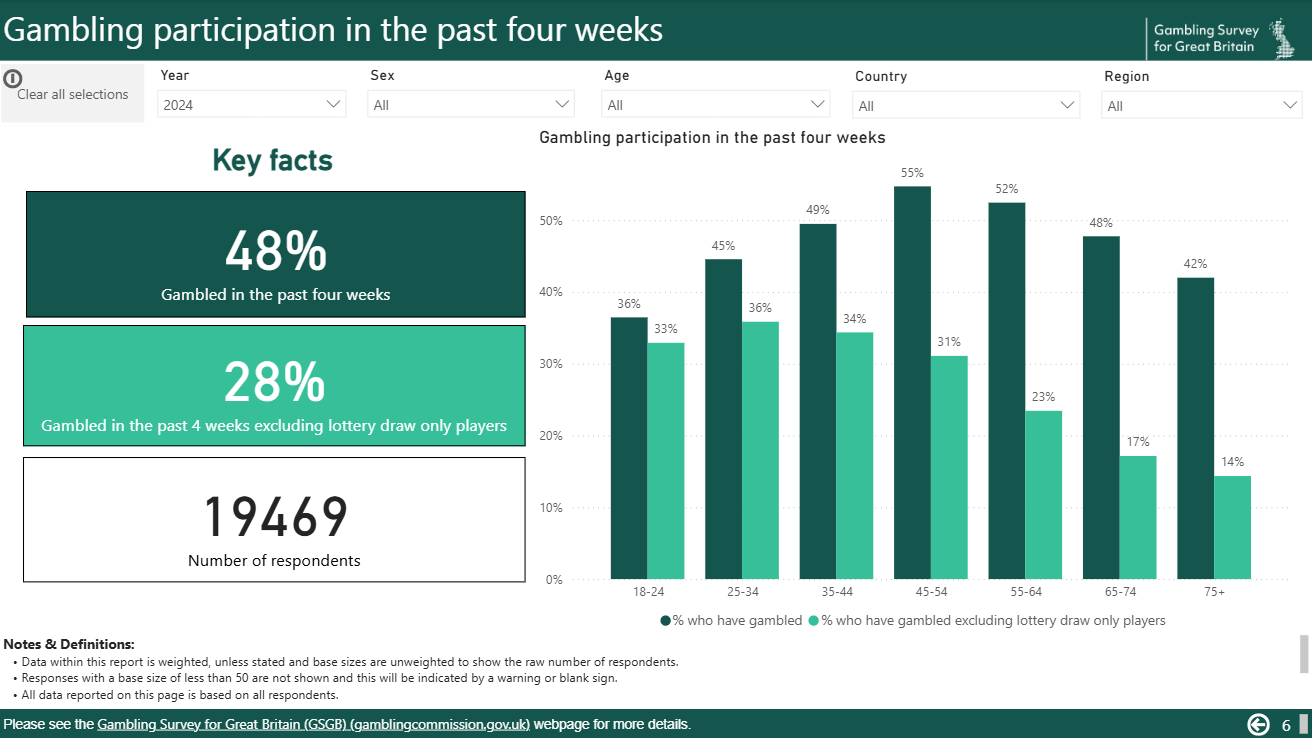
If you follow UK gambling policy, bad data is not a small issue. It can shape regulation, public messaging, operator costs, and how harm is measured across the market. That is why the latest criticism of the UKGC gambling survey accuracy matters right now. A new analysis, covered by GamblingNews, argues that the Gambling Survey for Great Britain may overstate gambling participation and problem gambling rates when compared with other long-running studies and official benchmarks. Those are serious claims. And if the numbers at the center of the debate are shaky, every argument built on top of them looks weaker too. For regulators, operators, researchers, and players, this is about one thing. Can the industry trust the headline figures being used to guide major decisions?
What stands out
- The new analysis questions whether the UKGC survey produces figures that line up with other respected datasets.
- Critics say methodology changes may have pushed participation and harm estimates higher than expected.
- Survey design matters because policymakers often treat fresh official numbers as the baseline for reform.
- Public trust drops fast when gambling statistics shift sharply without a clear real-world explanation.
Why UKGC gambling survey accuracy is under pressure
The dispute centers on the Gambling Survey for Great Britain, the UK Gambling Commission’s newer flagship research tool. According to the reported analysis, the survey’s estimates appear out of step with other sources, including the Health Survey for England and the Adult Psychiatric Morbidity Survey. That gap has raised an obvious question. Are these figures capturing reality, or are they capturing flaws in survey design?
Look, survey work is hard. Response bias, sample construction, question wording, and mode effects can all distort results. But when a new survey produces results that differ sharply from older benchmarks, the burden is on the regulator to explain why.
Official gambling data does more than describe the market. It helps justify policy choices, enforcement priorities, and public debate.
That is the heart of the issue. If the methodology is sound, the UKGC needs to show it clearly. If it is not, the numbers should not be treated as settled fact.
What the criticism appears to focus on
Based on the GamblingNews report, the analysis questions both participation estimates and rates of gambling harm. The concern is that the UKGC’s survey may be producing inflated readings compared with established studies that have tracked similar behavior for years.
Here is where this gets tricky. A newer survey is not automatically wrong because it differs from older ones. Behavior changes. Markets move. Online products spread fast. But a sudden statistical jump needs context, especially in a sector where political pressure is already high.
Likely problem areas in gambling survey design
- Sampling method. If the sample does not reflect the broader population, estimates can skew high or low.
- Question wording. Small wording changes can alter how respondents interpret gambling activity or harm.
- Mode effects. Online, phone, and face-to-face surveys often produce different answers.
- Weighting choices. Adjustments meant to correct the sample can also amplify distortions if the base data is weak.
- Screening thresholds. Problem gambling tools are useful, but they can be sensitive to context and presentation.
Think of it like a football league table built from matches played under different rules. You can still compare teams, but the ranking will spark arguments for good reason.
Why this matters beyond academic debate
This is not a niche fight among statisticians. If UKGC gambling survey accuracy is in doubt, the fallout reaches almost every part of the sector.
Operators may face heavier compliance demands based on questionable prevalence rates. Advocacy groups may cite figures that sound firmer than they really are. Journalists may repeat dramatic numbers without enough caveats. And lawmakers may push restrictions using evidence that still needs stress testing.
That has happened before in gambling policy.
Honestly, the industry has a long history of arguing over data because the stakes are real. Prevalence estimates can affect affordability debates, ad restrictions, online slot policy, treatment funding, and how the public sees ordinary recreational gambling. One survey cannot carry all of that weight unless its methods are solid and transparent.
What a credible regulator should do next
If I were covering this from Westminster, I would ask for less spin and more technical clarity. The right response is not to dismiss critics or wave around a single topline figure. It is to open the hood.
A sensible path would include:
- Publishing a plain-English explanation of why the new survey differs from older studies.
- Releasing detailed methodological comparisons with prior UK datasets.
- Inviting independent review from statisticians and public health researchers.
- Showing confidence intervals and uncertainty more prominently in public summaries.
- Avoiding bold policy claims until the discrepancies are better understood.
And yes, that level of scrutiny should be non-negotiable.
How the industry should read the UKGC gambling survey accuracy debate
Operators should not treat this as a free pass to reject all harmful gambling research. That would be lazy and self-defeating. But they do have grounds to ask whether the latest survey is being used too aggressively before its limits are fully tested.
The smarter stance is balanced. Accept the need for hard evidence on gambling harm. Push for higher-quality evidence at the same time. Those positions fit together.
For trade bodies, compliance teams, and investors, the practical takeaway is simple. Watch how the UKGC responds, whether outside experts weigh in, and whether future survey waves narrow or widen the gap with other datasets.
The bigger trust problem
Regulators depend on credibility. Once confidence in core statistics starts to wobble, every later claim gets examined harder. Fair enough.
That is why this story matters beyond one report. The UK gambling market is already dealing with friction over affordability checks, black market risk, consumer protection, and political oversight. Add disputed baseline data to that mix, and the policy conversation gets noisier fast.
But there is also an upside here (if the UKGC handles it well). Serious scrutiny can improve the quality of future gambling research. Better methods lead to better policy. That is the point.
What to watch next
The next phase should be less about headlines and more about evidence. Will the UKGC defend the survey with detailed methodological support? Will independent experts agree? Will later data releases show the same pattern?
Those answers matter more than anyone’s press statement. Because if UKGC gambling survey accuracy remains in dispute, the industry is left making expensive and political decisions on an unstable foundation. And that is no way to regulate a market this sensitive.