Prediction Market Fairness Faces Fresh Scrutiny
You may see prediction markets pitched as clean, efficient tools that turn crowd opinion into accurate odds. That sales line matters because these platforms now sit closer to politics, finance, sports, and online betting than ever before. But a new debate over prediction market fairness cuts through the hype. If these markets can be pushed around by large traders, insiders, or low-liquidity conditions, their prices may say less about truth and more about who has the deepest pockets. That is a problem for traders, regulators, and anyone who treats market prices like reliable signals. And if prediction markets keep expanding into regulated and gray areas, the fairness question stops being academic. It becomes a market integrity issue.
What stands out
- A recent study questions whether prediction market prices always reflect fair, unbiased information.
- Low liquidity and concentrated trading can make outcomes easier to influence.
- The fairness debate matters for gambling, political forecasting, and financial oversight.
- Regulators may need to look harder at transparency, disclosure, and market structure.
Why prediction market fairness matters now
Prediction market fairness is not a niche concern anymore. These platforms are often framed as smarter than polls, sharper than pundits, and efficient enough to price uncertain events with unusual precision. Honestly, that claim has always needed a hard look.
The core idea is simple. Users buy and sell contracts tied to future outcomes, and the price is meant to reflect the market’s view of the probability. But what happens if a thin market gets nudged by one aggressive participant, or a cluster of traders all react to the same bad signal? You do not get wisdom of crowds. You get noise with a price tag.
That gap matters most in markets with low participation, weak disclosure, or event rules that are hard for ordinary users to parse (and many are harder than they look).
What the study appears to challenge
Based on the reporting from GamblingNews, the study questions whether prediction markets are as fair and reliable as supporters often claim. The concern is less about whether markets can ever be useful and more about whether they can be distorted in ways that make prices less trustworthy.
Look, this is the oldest fight in market structure. A price only means something if the path to that price is reasonably clean. If access is uneven, liquidity is shallow, or a few players can move the number, the output gets shaky fast.
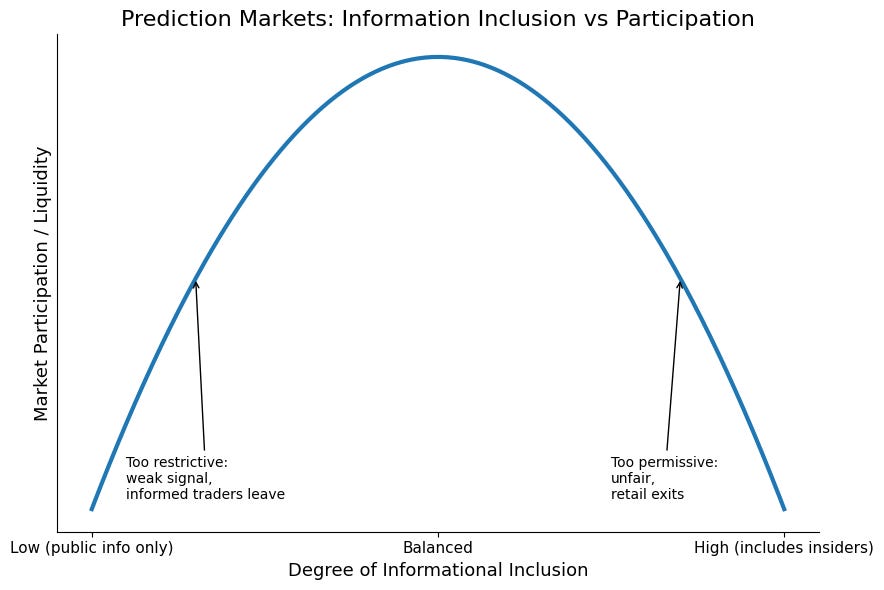
Prediction markets work best when information is broad, participation is deep, and no single actor can move the price too easily.
That sounds obvious. But obvious rules are often the first ones ignored when a sector grows faster than its safeguards.
How unfair prediction markets can form
1. Thin liquidity
A market with too few active traders is easier to push around. One sizable order can create a misleading price signal, and later traders may mistake that move for genuine new information.
Think of it like a small auction room. If only a few people are bidding, one loud buyer can reset the mood of the whole place.
2. Information imbalance
Some participants may have better data, faster access, or a sharper read on the event rules. That does not automatically make a market unfair. It does, however, create a structural edge that casual traders often underestimate.
3. Manipulation incentives
In some cases, a trader may want to move a market for reasons beyond direct profit on the contract itself. They may want headlines, social media reaction, or a spillover effect in another market. That is where things get messy.
4. Contract ambiguity
Prediction markets can hinge on technical wording, official declarations, or timing rules. If settlement terms are muddy, informed insiders may exploit those gaps while ordinary users trade on a simpler interpretation.
That is bad plumbing.
What this means for traders and bettors
If you use these markets, the practical lesson is not to panic. It is to stop assuming the price is automatically smart. Sometimes the market is telling you something real. Sometimes it is just showing you who showed up first with size.
- Check liquidity before trusting the odds.
- Read settlement rules closely.
- Watch for sharp moves on low volume.
- Be careful with markets tied to vague public statements or legal interpretations.
- Treat price as one signal, not the whole story.
And ask the basic question. Who benefits if this market moves right now?
Prediction market fairness and regulation
Prediction market fairness also matters for regulators because these products sit near several legal lines at once. Depending on structure and jurisdiction, they may look like financial instruments, event contracts, or gambling-adjacent products. Each frame brings different rules, and different blind spots.
Regulators tend to care about a few concrete issues:
- Market manipulation risk
- Transparency of pricing and order flow
- Consumer understanding of event rules
- Access to material information
- Conflict between public interest and speculative trading
That does not mean every prediction market is broken. But it does mean the industry should expect harder questions. And fair enough.
Are prediction markets still useful?
Yes, sometimes. The strongest case for them is that they can aggregate dispersed information faster than many static forecasting tools. In liquid markets with clear rules and broad participation, they may produce useful signals.
But supporters often overstate that edge. A market can be functional without being pure. It can be informative without being fully fair. Those are very different claims, and this study seems to press right on that fault line.
Veteran observers have seen this movie before in betting exchanges, small-cap stocks, and even niche crypto tokens. Price discovery is only as sound as the structure holding it up.
What to watch next
The next phase of this debate will likely center on disclosure, surveillance, and platform design. Operators that want credibility should make it easier for users to assess liquidity, concentration, and settlement logic before they trade.
A few practical upgrades would help:
- Clearer contract wording
- Better visibility into market depth
- Stronger anti-manipulation monitoring
- Public explanations of dispute resolution
- Limits that reduce outsized influence in very thin markets
If operators resist those steps, that tells you something too.
The real test ahead
Prediction markets do not need to be perfect to be useful. They do need to be honest about their weak spots. The study highlighted by GamblingNews puts pressure on a favorite industry talking point, namely that market prices are naturally fair because markets are smart. Sometimes they are. Sometimes they are just fragile systems wearing the language of efficiency.
If this sector wants broader trust, it should stop selling certainty and start proving integrity. The next question is simple. Will platforms tighten the structure on their own, or wait until regulators do it for them?