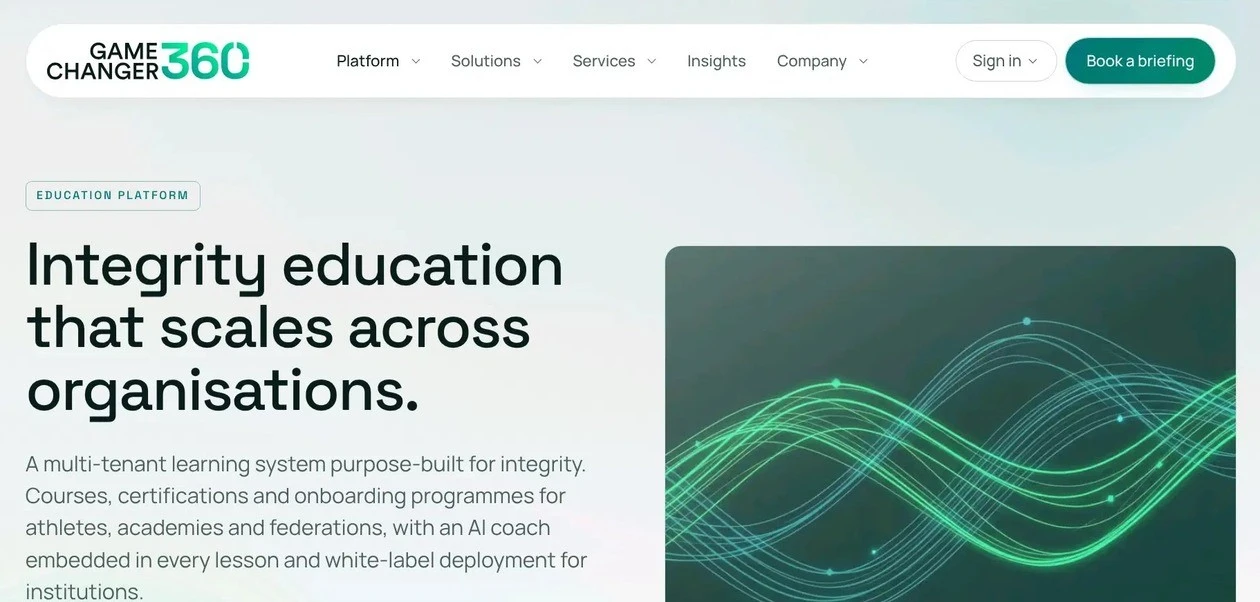
GC360 Integrity Monitoring: SwAIBU Targets Betting Risk
Suspicious betting does not wait for slow committees, and that is the problem SwAIBU is trying to address with GC360 integrity monitoring. As legal sports betting spreads across more markets, leagues, operators, data firms, and regulators need faster signals when something looks off. The launch, reported by iGaming Business, puts SwAIBU into a crowded but high-stakes corner of the industry: sports integrity technology. This is not a flashy consumer product. It is plumbing. But in betting, plumbing matters because one bad match, one leaked injury report, or one ignored alert can damage trust far beyond a single event. I have covered enough integrity launches to be skeptical of big claims. Still, a dedicated monitoring site is worth watching if it helps the right people act before a scandal hardens into a headline.
What stands out
- SwAIBU has launched GC360 as an integrity monitoring site for sports betting risk.
- The product speaks to a real market need: quicker detection of suspicious betting patterns and related threats.
- Its value will depend on data quality, alert discipline, and how operators or sports bodies use the system.
- GC360 enters a field where trust, audit trails, and response speed matter more than branding.
Why GC360 integrity monitoring matters now
Sports betting has moved from side market to mainstream business in many regions. That shift brings money, attention, and sharper risk. More betting markets mean more odds, more prop bets, and more data points for integrity teams to review.
That is good for detection, at least in theory. The catch is volume. If every alert looks urgent, nothing is urgent. A useful system needs to separate noise from signal, like a good editor cutting a messy draft down to the few lines that matter.
Integrity monitoring only works when alerts lead to action. A dashboard is not a defense by itself.
GC360 integrity monitoring appears to sit in that practical gap. According to iGaming Business, SwAIBU has launched the site to support betting integrity oversight. The sharper question is not whether the site can collect information. It is whether it can help users make better calls under pressure.
What GC360 integrity monitoring should help teams do
For operators, leagues, and regulators, the job is rarely simple. A strange betting move might point to inside information. It might also reflect a public rumor, a market correction, or a sharp bettor finding a bad price. Who decides which is which?
A sound integrity monitoring tool should help teams do four things well:
- Spot unusual movement early. Timing matters, especially around smaller competitions where liquidity can be thin.
- Connect betting data with event context. A price move after a lineup change is different from a move before anyone should know.
- Create a clear record. Investigations need timestamps, sources, and escalation notes.
- Support human judgment. Models can rank risk, but people still need to review evidence and decide what happens next.
That last point is non-negotiable.
Too many tech pitches treat automation as if it removes responsibility. It does not. In integrity work, automation should make human review faster and less blind. It should not become a black box that everyone hides behind when a decision goes wrong.
SwAIBU GC360 integrity monitoring and the bigger compliance push
SwAIBU is launching GC360 at a time when sports betting compliance is getting more detailed. Regulators are asking harder questions about responsible gambling, data sources, anti-money laundering controls, and event integrity. The days of treating integrity as a back-office concern are fading.
That change affects smaller rights holders as much as global leagues. Top-tier sports often have relationships with monitoring firms and data partners. Lower-tier competitions may have thinner budgets, fewer staff, and less bargaining power. They can also be more exposed to match-fixing attempts because one compromised participant can move the needle.
Look, no platform can erase that risk. But a better monitoring setup can shorten the time between suspicion and review. That can be the difference between stopping damage early and trying to reconstruct it months later.
Where the product will be judged
GC360 will not be judged by launch language. It will be judged by boring operational details. Can users understand why an alert fired? Can the system handle niche markets? Does it reduce false positives over time? Can evidence be shared with the right party without leaking sensitive data?
Those details decide whether an integrity platform becomes part of daily workflow or another tab nobody checks.
What operators should ask before relying on GC360
If you run trading, compliance, or integrity at a betting operator, do not buy any monitoring tool on reputation alone. Ask plain questions and demand plain answers. The best vendors usually welcome that because they know vague promises do not survive real incidents.
- What sports, leagues, and bet types does GC360 cover?
- How does it define suspicious activity?
- Can users tune alert thresholds by sport, region, and market depth?
- What data sources feed the monitoring site?
- How are false positives reviewed and reduced?
- What export, audit, and case-management tools are included?
- Who owns the data created during an investigation?
Here is the thing. Integrity work is closer to airport security than consumer analytics. You need enough friction to catch threats, but not so much that the whole operation slows down. The best systems help teams move quickly without skipping evidence.
The hard part: cooperation across the betting chain
Even a strong monitoring site can fail if the industry around it refuses to cooperate. Operators see betting patterns. Leagues know athlete and team context. Regulators can compel action. Data providers often sit between all of them.
GC360’s real impact may depend on whether it can fit into that chain without adding more confusion. A clean alert sent to the wrong inbox helps nobody. A good alert with no escalation path is just a warning light on a dashboard.
Sports integrity has another uncomfortable problem: incentives do not always line up. An operator may want to freeze a market. A league may worry about reputational harm. A regulator may need formal evidence before acting. That is why process matters as much as prediction.
What happens next for GC360 integrity monitoring
SwAIBU’s launch gives the market another tool at a time when betting integrity needs more than press-release optimism. The next test is adoption. If GC360 can give compliance teams cleaner signals, better records, and faster escalation, it has a credible role to play.
If it becomes another risk dashboard with vague alerts, users will move on.
My practical advice: treat GC360 as a system to test, not a shield to trust blindly. Run pilots against past incidents, measure false positives, and ask your trading and compliance staff whether it improves their day. The future of betting integrity will belong to products that prove their worth during messy, time-sensitive cases, not on launch day.