AI in B2B Marketing: What Actually Changes
B2B teams keep hearing that AI will fix targeting, speed up content, and make sales and marketing work together. The problem is that most of the noise skips the part that matters: AI in B2B marketing only helps if you know where it fits and where it does not. Otherwise, you just add another tool and more confusion.
That matters now because buyers expect faster responses, tighter relevance, and less generic outreach. Your competitors are already testing AI for lead scoring, content support, and account research. The real question is not whether AI is coming. It is whether you will use it with discipline or let it flood your funnel with bland output.
What AI in B2B marketing is changing first
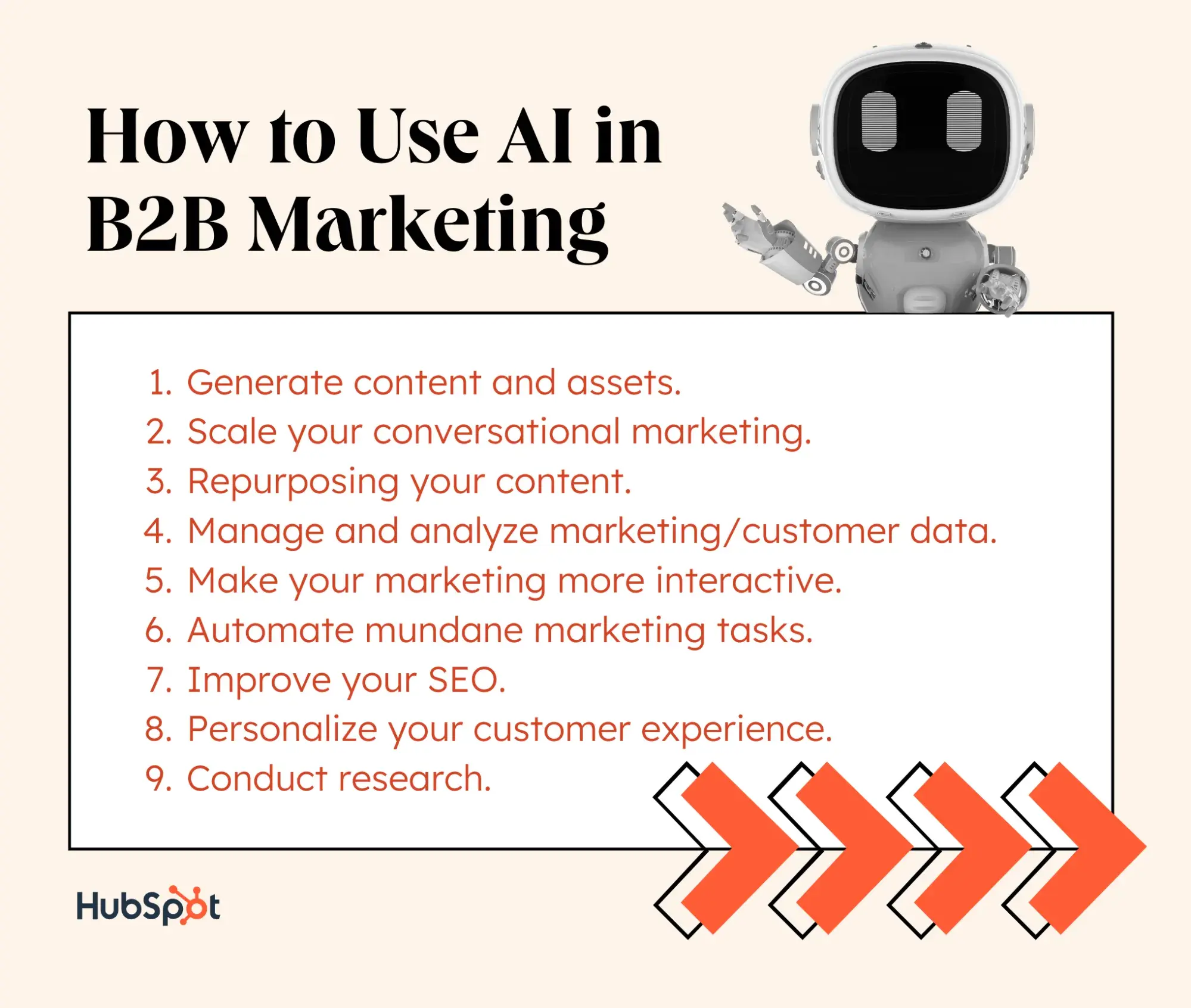
- Lead prioritization. AI can sort accounts and contacts by intent signals, fit, and behavior faster than manual scoring.
- Content production support. It can help draft briefs, summaries, and first-pass copy, then free your team for editing and positioning.
- Sales handoff quality. Better enrichment and routing can reduce the lag between marketing-qualified leads and sales follow-up.
- Personalization at scale. AI can shape messages by industry, role, or stage without rewriting every asset from scratch.
Look, this is not magic. It is closer to a good kitchen knife than a machine that cooks dinner for you. The tool helps only if your inputs are sharp. Bad data, weak offers, and lazy messaging still produce bad results.
Where AI in B2B marketing earns its keep
The strongest use case is pattern recognition. AI can spot signals in CRM records, web visits, email engagement, and content behavior that humans miss when the list gets long. That can help you decide which accounts deserve attention now, and which ones can wait.
It also helps with repeatable work. Need a first draft of a nurture sequence, a webinar recap, or an account summary for sales? AI can cut the blank-page problem down to size. But your team still has to add the strategic edge, because buyers can tell when a message was assembled by a machine and approved by nobody.
AI is strongest when it removes friction from routine work. It is weakest when you expect it to replace judgment.
Better data, better decisions
If your CRM is messy, AI will not save it. It will just process the mess faster. Clean contact fields, consistent lifecycle stages, and clear attribution rules matter more now, not less.
That is why the smartest teams treat AI like an analyst with no opinions. Useful, fast, and blind without human direction. If the model says one segment converts better, ask why. Is it true intent, better offer fit, or simply better data capture?
How to use AI in B2B marketing without producing generic sludge
- Start with one workflow. Pick a narrow use case, such as lead enrichment or first-draft email copy.
- Define the human checkpoint. Decide who reviews output and what they are checking for.
- Feed it better inputs. Use approved messaging, real customer examples, and clean segment data.
- Measure one outcome. Track reply rate, time saved, MQL-to-SQL conversion, or content production speed.
- Refine the prompt and process. If the result is weak, improve the source material before blaming the model.
Here is the thing. AI works better in a narrow lane than in a vague strategy deck. Give it a job with boundaries. Then measure whether it actually improved the workflow, not whether it sounded impressive in a meeting.
What buyers still expect from you
Buyers do not want a machine speaking at them. They want relevance, proof, and a reason to respond. AI can help you deliver those things faster, but it cannot invent trust.
And trust is the real bottleneck. If your message feels automated, your audience will tune out. If it sounds specific, informed, and useful, they may not care whether AI helped draft it.
That is the standard now. Not more content. Better content, cleaner targeting, and faster response times.
Why this shift will keep widening
The gap will grow between teams that use AI as a workflow aid and teams that use it as a shortcut. The first group will get sharper at testing, segmentation, and sales support. The second group will drown in output.
Think of it like building a house. AI is the power saw, not the blueprint. If the plan is weak, the cuts just make the mistake faster.
Want the practical next step? Audit one marketing workflow this week and ask where AI can save time without weakening judgment. That is where the real edge starts.
Sources and signals to watch
Industry coverage from iGamingExpert reflects a wider shift across B2B teams, where AI is being discussed less as a novelty and more as a working part of marketing operations. Watch for changes in CRM enrichment, content ops, and account-based marketing stacks. Those are the places where the pressure is most visible now.