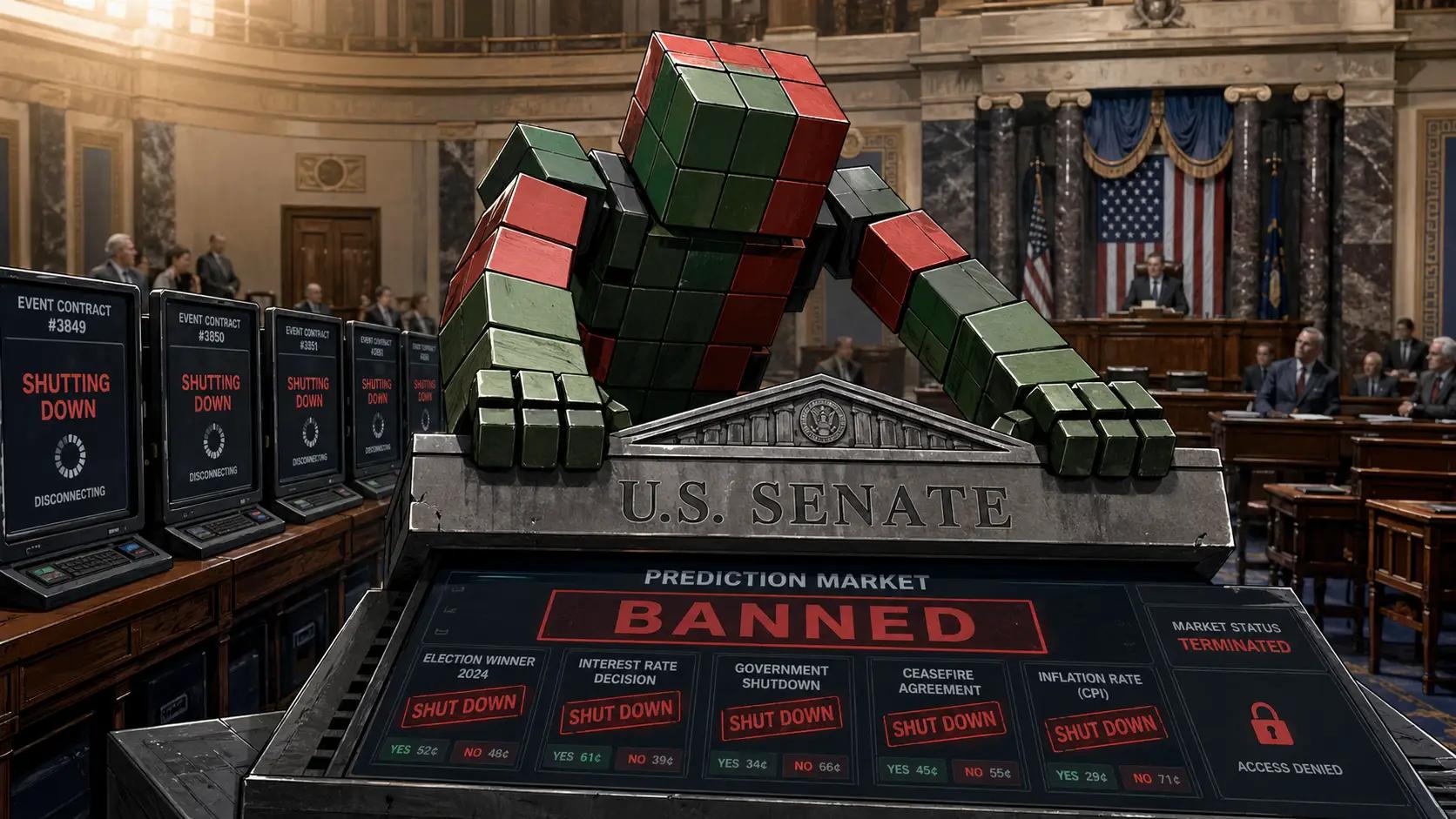
US Senate Event Markets Ban Explained
If you follow prediction markets, political betting, or the broader clash between gambling law and financial regulation, the new US Senate event markets ban matters right now. Lawmakers are trying to stop members of Congress and some federal officials from betting on event contracts tied to politics, legislation, and other sensitive outcomes. That may sound narrow. It is not. The move lands in the middle of a bigger fight over how event markets should work in the United States, who should regulate them, and where the line sits between hedging, speculation, and straight-up gambling.
And if you work in gaming, compliance, or fintech, this is the part you cannot ignore. Rules aimed at public officials often become a template for broader restrictions later. So what is really happening here, and why are so many people watching it closely?
What to watch
- The proposal targets conflicts of interest. It aims to stop senators and certain government insiders from trading on event markets linked to political or policy outcomes.
- The issue reaches beyond Capitol Hill. It adds pressure to the wider debate over CFTC oversight of prediction markets.
- Compliance teams should pay attention. Even a narrow political ethics rule can shape future market access and product design.
- This is about trust as much as trading. Lawmakers are responding to the optics of elected officials wagering on events they can influence.
Why the US Senate event markets ban is gaining traction
The logic is easy to grasp. If lawmakers can vote on a bill, influence a hearing, shape public messaging, or gain nonpublic insight into a government action, should they be allowed to bet on the result? Most people hear that question and answer fast. No.
That public reaction is the fuel behind this effort. Members of Congress already face scrutiny over stock trading and conflicts of interest. Event markets add a newer, messier layer. Unlike a broad market index, a contract on an election result, agency action, or legislative outcome can look very close to a wager on the machinery of government itself.
Look, this is the core political problem. A market may be legal under one framework, but it can still look ethically rotten if the people shaping the outcome are also allowed to trade on it.
That does not mean all event markets are the same. Some operators argue these contracts serve price discovery and public forecasting. Fair point. But Congress is not treating this as a theory exercise. It is treating it as a trust issue.
What the Senate proposal appears to cover
Based on reporting from GamblingNews.com, the Senate move would block members from betting on event markets. The focus is on reducing ethical risk tied to political and policy-linked contracts. While the exact legislative text and scope will matter, the public framing is already clear.
The likely areas of concern include:
- Political event contracts, such as elections or control of Congress
- Legislative outcome markets tied to bills or policy action
- Contracts linked to government decisions that insiders may influence
- Possibly related activity by covered staff or immediate family, depending on final language
Small rule. Big signal.
Why? Because a ban aimed at officeholders does two things at once. It addresses optics inside government, and it tells market operators that Washington is watching event contracts far more closely now.
How the US Senate event markets ban fits the larger prediction markets fight
This story is not happening in isolation. Event markets have become a live battleground between gambling regulators, financial regulators, trading platforms, and political critics. The Commodity Futures Trading Commission, or CFTC, sits near the center of that debate for many federally structured event contracts.
Some platforms present event contracts as derivatives products, not sportsbook bets. That distinction matters. It affects licensing, consumer protections, market access, and what kinds of underlying events are allowed. But here is the awkward truth. To the average voter, a contract on a Senate race often looks like a bet, walks like a bet, and carries the same conflict concerns as a bet.
It is a bit like calling a kitchen torch a culinary instrument instead of a fire source. Technically, that may be correct. But if someone is waving it near curtains, nobody cares about the label first.
That is why the US Senate event markets ban could have ripple effects beyond Congress. It adds political pressure to draw harder lines around markets tied to elections and government action.
What operators and compliance teams should do now
If you run a platform, advise one, or build risk tools around these products, waiting for final headlines is a mistake. You should assume scrutiny will rise, not fade.
Practical steps worth taking
- Review whether your event contracts touch elections, legislation, or regulatory actions.
- Check onboarding and KYC rules for politically exposed persons, public officials, and connected parties.
- Update restricted user lists and monitoring triggers.
- Map which regulator has authority over each product line and where legal gray zones still exist.
- Stress test public messaging. If a product is legal but looks ethically shaky, expect heat anyway.
Honestly, perception drives policy faster than technical nuance in cases like this. Compliance officers know that. Product teams sometimes learn it the hard way.
Will this stop event markets from growing?
Probably not on its own. The demand for prediction products is real, especially around politics, economics, sports-adjacent data, and cultural events. Traders like them. Researchers watch them. Media outlets quote them. And some advocates argue they can aggregate information better than polling or punditry.
But growth with tighter fences is a different story.
A targeted ban on lawmakers could make the broader sector more acceptable to skeptics if operators treat it as a baseline ethics measure rather than an attack. Or it could be the first domino if Congress decides election-linked contracts are too politically toxic to tolerate at scale. Which path wins? That depends on how aggressively platforms push into sensitive categories, and how willing regulators are to separate forecasting tools from gambling products in practice.
Why this matters outside gambling and fintech
This issue also speaks to a bigger public question. How much financial speculation should be allowed on democratic processes? There is no easy answer, and anyone claiming otherwise is selling certainty they do not have.
Still, the political instinct here is easy to read. Voters already distrust institutions. Letting elected officials place trades on outcomes they can influence would pour gasoline on that distrust. From a policy standpoint, banning that behavior is the low-hanging fruit.
The fastest way to sour people on a market is to make it look rigged by insiders, even if no rigging is proven.
That is why this story matters beyond betting. It sits at the intersection of ethics law, market structure, and public legitimacy.
What comes next
Watch the details, not just the headline. The final language will decide whether this remains a narrow ethics fix or becomes a marker for wider action against political event contracts. Scope matters. Definitions matter. Enforcement matters even more.
If you are in gaming, regulation, or exchange-style product design, now is the time to audit exposure and tighten internal rules. And if Congress is willing to block itself from using these markets, the next obvious question is staring the industry in the face. How long before lawmakers ask whether the public should face limits too?