Rank Group UKGC Fine: What Operators Should Fix Now
If you run a gambling business in Britain, the Rank Group UKGC fine should make you check your controls before your next compliance review. The Gambling Commission has again shown that weak anti-money laundering checks and slow safer gambling action carry real financial pain. Rank Group has agreed to pay £6.6 million after the regulator found failures across its online and land-based operations, according to Yogonet’s report on the case. The issue is bigger than one operator. It cuts to a familiar problem in UK gambling compliance: firms often collect risk data, but they do not act on it fast enough. And if a customer’s spend, losses, or behaviour changes sharply, “we were monitoring it” is not a defence. The regulator wants proof that you spotted the risk, escalated it, and intervened in time.
What Matters Here
- Rank Group agreed to pay £6.6 million after UKGC identified AML and safer gambling failings.
- The case involved both anti-money laundering controls and customer protection processes.
- Operators should review triggers, source-of-funds checks, affordability assessments, and escalation records.
- The enforcement trend is clear: UKGC expects faster action, not passive monitoring.
- This case gives compliance teams a practical checklist for board-level risk reviews.
Why the Rank Group UKGC Fine Matters
The Rank Group UKGC fine lands in a market where operators already face tighter scrutiny from the Gambling Commission, financial crime teams, banks, and political stakeholders. That pressure is not abstract. It affects account reviews, licence risk, investor confidence, and how payment partners judge your business.
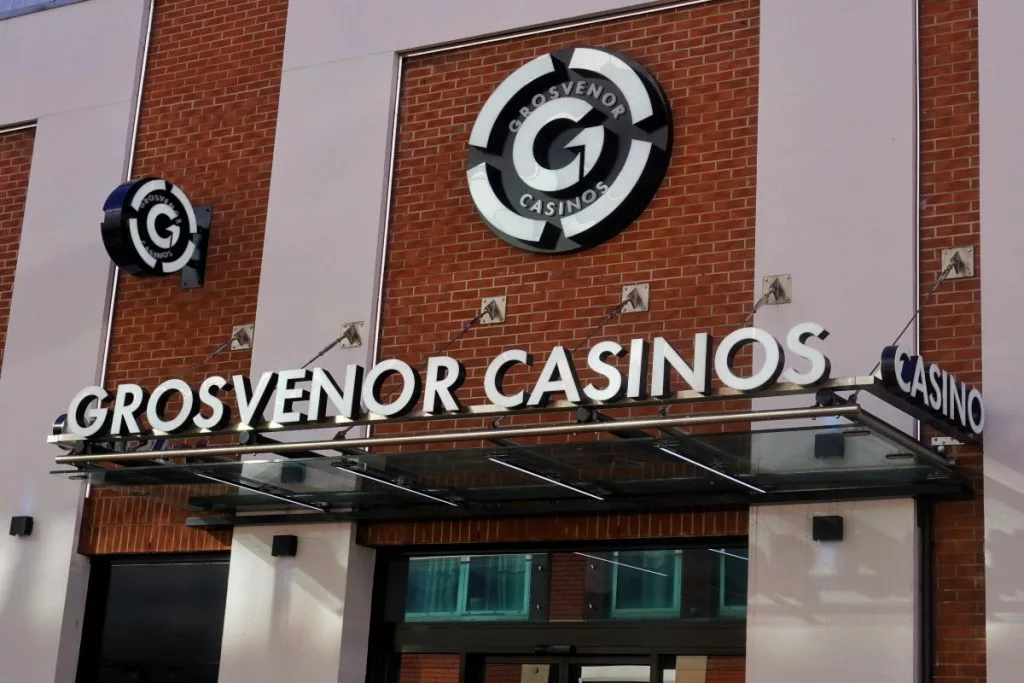
Rank Group is a known name in British gambling, with brands and venues that sit in the public eye. So this penalty is not some obscure footnote. It is another sign that large, established operators can still stumble on basic control execution.
Regulators are no longer impressed by thick policy documents. They want to see timely decisions, clear evidence, and customer-level action.
Here’s the thing. A compliance framework can look polished in a board pack, but fail at the counter or inside a customer account review queue. That gap is where enforcement cases are born.
What UKGC Found in the Rank Group UKGC Fine Case
Yogonet reported that Rank Group agreed to pay £6.6 million to the UK Gambling Commission over anti-money laundering and safer gambling failings. The full regulatory message is familiar: operators must spot risk, assess it properly, and take action before harm grows.
AML and safer gambling failures often overlap. A customer who spends heavily without clear source-of-funds evidence may also show signs of gambling harm. Treating those issues as separate files can slow the response.
That is a mistake.
AML weaknesses operators should check
Anti-money laundering controls need to do more than tick a form. They must answer a blunt question: does the customer’s gambling make sense based on what you know?
- Are your source-of-funds checks triggered early enough?
- Do you verify source of wealth where the risk profile calls for it?
- Can frontline staff pause play or escalate without waiting for a monthly review?
- Do your risk scores update when customer behaviour changes?
- Are enhanced due diligence decisions recorded in plain language?
Look, the best AML systems work like airport security. Most people move through quickly, but unusual signals get extra checks before the risk walks through the gate.
Safer gambling gaps that keep appearing
Safer gambling failures usually come from delay. The customer hits a trigger, the system logs it, and then too little happens. A generic email goes out, or a case sits in a queue while losses continue.
That does not satisfy the regulator. UKGC has repeatedly pushed operators to show meaningful interaction, not automated gestures that protect the operator more than the player.
Practical Lessons from the Rank Group UKGC Fine
Operators should not read this case as a one-off penalty. Read it as a compliance drill. If UKGC reviewed your files tomorrow, could you show why each high-risk customer was allowed to keep gambling?
Here is a direct plan for compliance, risk, and operations teams.
- Test your triggers against real accounts. Pull customer files with high deposits, rapid losses, long sessions, or cancelled withdrawals. Check whether your system flagged them early enough.
- Review the quality of interactions. A safer gambling message is weak if it asks nothing, changes nothing, and records no outcome.
- Shorten escalation timelines. If serious risk takes days to reach a decision-maker, your process is too slow.
- Link AML and player protection data. High spend, unclear funds, and risky play patterns should feed into one risk picture.
- Train venue and customer support teams with case examples. Policies are useful, but staff need to know what “stop and escalate” looks like in a live situation.
Honestly, this is where many operators still underinvest. They buy monitoring tools, then leave teams with vague instructions and overloaded queues. That is like buying a smoke alarm and ignoring the battery.
How Boards Should Read a UKGC Enforcement Action
A UKGC enforcement action is not only a compliance department problem. The board owns risk appetite, resourcing, and culture. If managers are rewarded mainly for revenue, then compliance teams can end up fighting the house.
Boards should ask sharper questions after the Rank case. Not “Do we have an AML policy?” but “How many customers breached our top-risk threshold last month, and what happened next?”
- How many high-risk cases are overdue?
- What percentage of safer gambling interactions led to limits, breaks, or account closures?
- How often do AML concerns lead to suspended activity?
- Which teams can override risk controls, and who reviews those decisions?
- Do compliance leaders have enough authority to halt revenue from risky customers?
Small metrics can expose big weaknesses. If the numbers show plenty of flags and few interventions, the board should worry.
Why UK Gambling Compliance Is Getting Less Forgiving
UK gambling compliance has moved from policy-based assurance to evidence-based enforcement. The regulator wants operators to prove what happened in the customer journey. That means timestamps, notes, risk decisions, staff actions, and follow-up checks.
There is also a political backdrop. Gambling harm, affordability, and financial crime remain sensitive topics in Britain. The Gambling Commission knows that public trust depends on visible enforcement.
What does that mean for you? More scrutiny of the messy middle, where alerts become decisions. The regulator will not stop at whether a system created a flag. It will ask whether a trained person made a sound call, at the right time, with enough evidence.
What to Fix Before the Regulator Finds It
The strongest response is a file-level audit. Pick a sample of customers who triggered AML, safer gambling, or affordability concerns. Then read the files like an investigator would.
Ask uncomfortable questions. Did the customer’s income support the spend? Were losses escalating? Did the operator pause play while asking for documents? Was there a real conversation, or only a template message?
And one more question: if this file appeared in an enforcement notice, would your explanation sound credible?
The safest compliance test is simple. Would you be comfortable explaining this customer decision to the regulator, a journalist, and the customer’s family?
That test may feel blunt, but it works. It forces teams to move beyond box-checking and into judgement.
The Next Move for Operators
The Rank Group UKGC fine should push operators to tighten the link between detection and action. Better dashboards help, but they do not replace clear ownership, fast escalation, and the nerve to stop profitable play when the risk is too high.
Start with your highest-risk customer files this week. If the evidence is thin, fix the process before someone else writes the story for you.