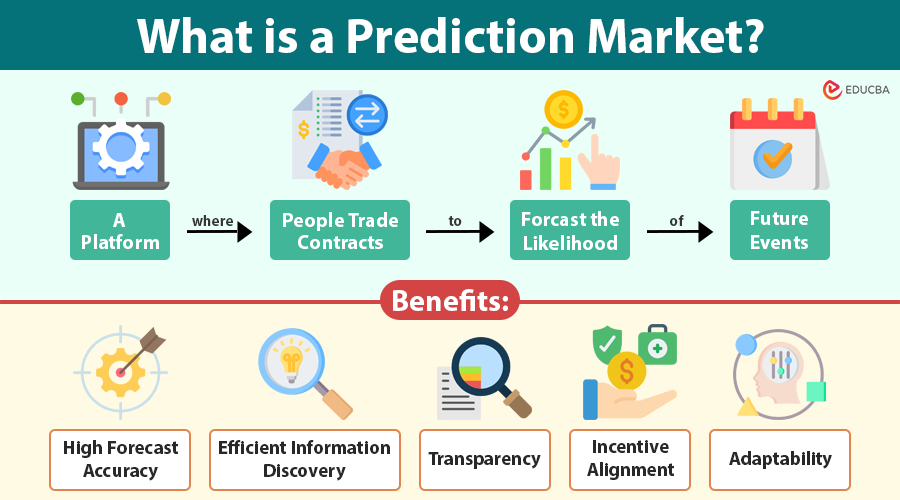
Prediction Market Contracts for Hedging Risk
If you are exposed to a binary outcome, you already know the headache. A tournament result, a regulatory vote, a customer churn threshold, or a political event can hit your budget fast. That is why prediction market contracts matter now. They give you a way to put a price on uncertainty, then use that price to offset risk before the outcome arrives.
Look, this is not magic. It is a trading tool, and trading tools can bite back if you size them badly or assume the market is smarter than it is. But the structure is useful, especially when traditional insurance does not fit and a plain old forecast is too soft to guide action. How else do you hedge an event that either happens or does not?
Used well, these contracts can act like a seat belt for event risk. Used badly, they can become a noisy bet with a fancy label. The difference comes down to contract design, liquidity, and whether your exposure actually matches the contract payoff.
What prediction market contracts do well
- They turn uncertain events into tradable prices.
- They can offset losses tied to a specific outcome.
- They are fast to adjust as new information appears.
- They work best when the event is clear and measurable.
- They can be cheaper and more flexible than some insurance setups.
How prediction market contracts hedge risk
The core idea is simple. If an event hurts you when it happens, you can take a position that gains value when that event becomes more likely. If the event goes your way, the hedge loses money, but your underlying business exposure improves. That is the trade-off.
Think of it like building a second line of defense in a football game. Your offense may still decide the outcome, but your defense keeps one bad play from wrecking the whole match. The hedge does not erase risk. It narrows the damage.
For example, if a company faces lower revenue if a team loses a championship game, it may buy contracts that pay out if the team loses. If the team does lose, the contract gain can soften the revenue hit. If the team wins, the company loses on the hedge but benefits from the stronger core business outcome.
Prediction market hedging works best when the payoff line is close to your real-world exposure. If the contract and the risk do not match, the hedge can look clever on paper and fail in practice.
Where the fit breaks down
The biggest problem is basis risk. That is the gap between the contract outcome and your actual financial exposure. A contract may settle on one official result, while your losses depend on a broader set of conditions. Those are not the same thing.
Liquidity is the second issue. If a market is thin, you may not be able to enter or exit at a fair price. And if spreads are wide, your hedge gets more expensive than it looked at first glance. That matters a lot in live event markets, where prices can move fast and attention can vanish just as fast.
Questions to ask before you hedge
- Does the contract settle on the same event that drives your loss?
- Can you size the position to match your exposure?
- Is there enough liquidity to exit if conditions change?
- Do you understand the settlement source and rules?
- What happens if the market price already reflects the risk?
Honestly, that last question is the one people dodge. If the market has already priced in the odds, the hedge may still help, but the cost of protection can be steep. That is not a reason to ignore it. It is a reason to be precise.
Why event-driven businesses care
Prediction market contracts are most useful for firms with sharp exposure to outcomes they cannot control. That includes media companies tied to sports results, operators with promotional liabilities, and brands with campaigns linked to elections, award shows, or other date-specific events. The more binary the risk, the cleaner the hedge.
For esports, the use case is especially sharp. A sponsor or media partner may face traffic, ad, or activation swings based on whether a team advances in a major bracket. The same logic shows up in live casino events and broadcast schedules, where audience demand can change quickly and inventory has a short shelf life. You cannot smooth that with a quarterly forecast deck.
And this is where executives often get lazy. They treat all event risk as if it were the same. It is not. A title match, a regulatory announcement, and a product launch each need a different contract structure, different sizing, and different settlement logic.
What smart risk teams do differently
The best teams treat prediction market contracts as part of a broader risk stack. They do not use them alone. They combine them with scenario planning, budget buffers, and clear trigger points for action.
They also document the hedge before they need it. That means defining the exposure, the target event, the contract size, the exit rule, and the person who can approve a trade. Without that, you are not hedging. You are improvising with money.
Good hedging is boring. That is the point.
If you want the cleanest possible setup, keep the structure tight:
- Match the event to the contract settlement rule.
- Match the size to your real downside, not your worst fantasy.
- Match the timing to when your exposure actually begins.
- Match the source to a clear, trusted resolution feed.
Where this market could go next
Prediction market contracts are not a replacement for insurance, and they will not suit every firm. But they do fill a gap that many risk teams still ignore. When the exposure is event-based, time-bound, and measurable, they can be a practical hedge rather than a speculative distraction.
The real test is not whether the idea sounds clever. It is whether the payout tracks the pain. If you cannot answer that in one sentence, the contract is probably the wrong tool. If you can, you may have a cleaner hedge than you thought.
So the next move is simple. Map your event risk, test the settlement logic, and ask whether the market price is buying you protection or just a costly illusion. Which one are you actually getting?