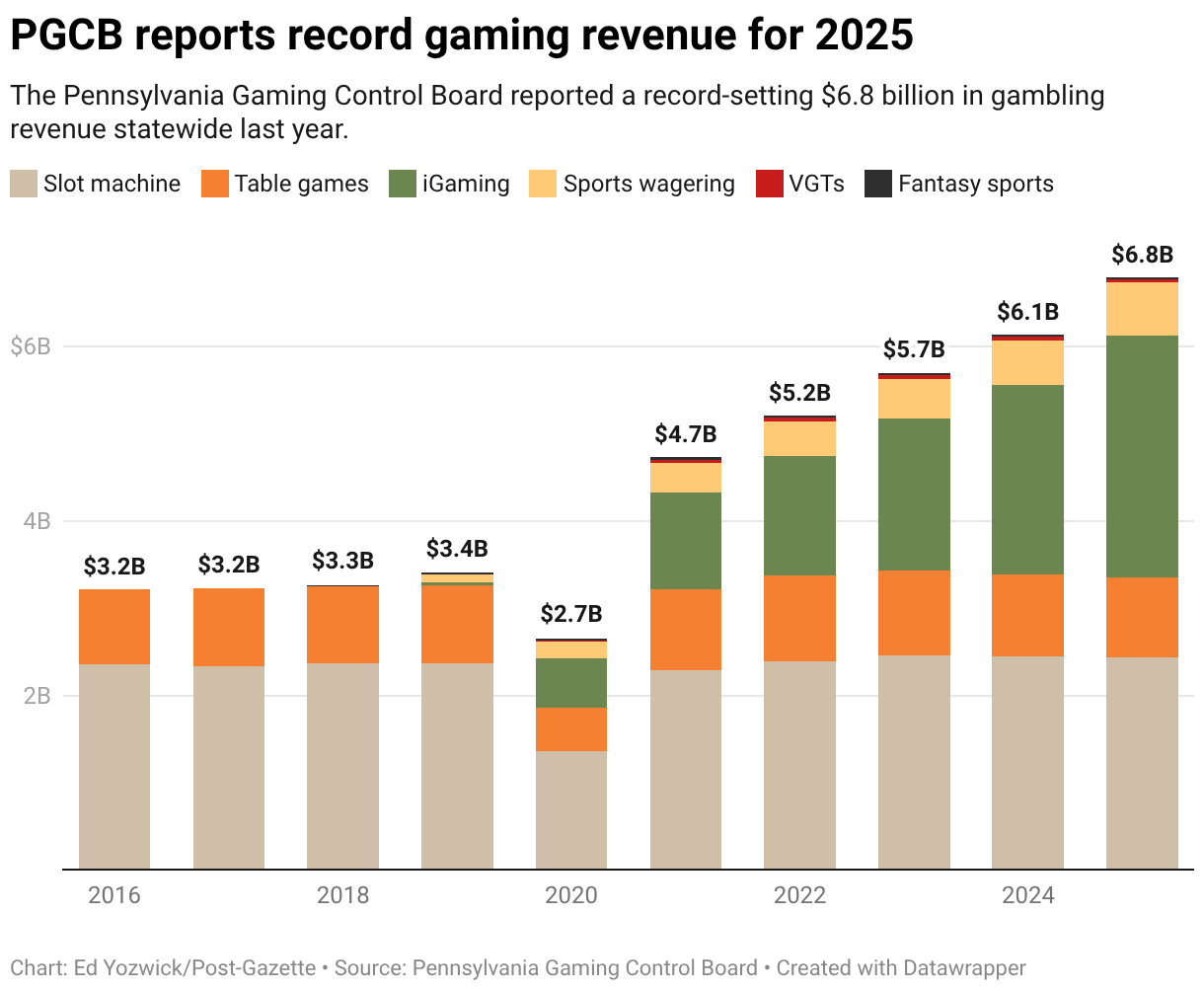
Pennsylvania Gaming Industry Tops $7B in FY26-27
Pennsylvania gaming industry revenue has crossed the $7 billion mark in FY26-27, and that matters for anyone tracking casino growth, tax take, or where the next round of investment will land. The number is more than a headline. It shows how mature the state’s market has become, even as operators keep chasing new ways to grow. If you work in gaming, payments, compliance, or media, you need to read this signal correctly. The easy take is that the market is healthy. The better take is that the mix behind the total tells you where pressure is building, where margins are thin, and where the state may push harder on regulation.
What stands out in the Pennsylvania gaming industry
- The total is now above $7 billion. That puts the state in a high-revenue tier that few U.S. markets can match.
- Online channels still matter. Digital betting keeps changing how players spend and how operators budget.
- Tax revenue stays central. Pennsylvania uses gaming as a major public finance engine.
- Competition is tight. Mature markets do not grow quietly. They fight for every point of share.
Big totals can hide thin margins. That is the first thing you should remember when a market clears a clean-sounding milestone like $7 billion.
Why the Pennsylvania gaming industry keeps growing
The state benefits from a broad mix of casino products, sports betting, iGaming, and ancillary spending. That mix matters because it spreads risk across several revenue streams instead of leaning on one format. Think of it like a restaurant that has dinner service, takeout, and catering. If one lane slows, the others can still carry the business.
But there is a catch. Growth in a mature state often comes from better channel mix, sharper promotions, and stronger retention, not from a huge rise in new customers. That means the market can look strong while operators still feel squeezed on acquisition costs and promotional spend.
Pennsylvania gaming industry and the tax question
State officials care about gaming because the tax base is real and predictable. Pennsylvania has long treated gambling as a serious fiscal tool, not a side story. That is one reason the state has stayed active on regulation and licensing. The money matters too much to ignore.
For operators, that creates a familiar tension. You want scale, but you also have to live with a high-tax structure and frequent scrutiny. Which matters more in the long run, topline growth or after-tax durability? In Pennsylvania, the answer is often the second one.
What operators should watch next
Look at the market the way a coach studies game film. The score tells you who won. The tape tells you how.
- Player mix. Are casual bettors returning, or is revenue leaning on a smaller set of heavy users?
- Channel balance. Are online and retail products supporting each other, or cannibalizing share?
- Promotional efficiency. Are operators buying growth, or earning it?
- Regulatory pressure. Are lawmakers likely to revisit tax rates, advertising rules, or responsible gaming standards?
These are not academic questions. They shape valuation, hiring, product planning, and media buying. They also tell you whether a headline total is healthy or fragile.
Pennsylvania gaming industry and the next phase
The next phase is less about breakout growth and more about discipline. Companies that can run lean, keep players engaged, and stay on the right side of regulators will be in better shape than firms chasing volume at any cost. That is the real story behind a $7 billion market.
And here is the part that deserves more attention. Once a market reaches this size, every small shift gets louder. A tax tweak, a promo cut, or a new product launch can move the whole conversation. If you follow Pennsylvania closely, what changes first: player behavior or policy?
Why this matters beyond one state
Pennsylvania is a useful test case for other mature U.S. gaming markets. It shows how online and retail formats can coexist, how state revenue can expand without endless new openings, and how regulatory pressure never really leaves the room. For analysts, it is a clean read on where U.S. gaming may be headed next.
For operators, the message is simpler. Growth is still possible, but easy growth is gone. The firms that win now will be the ones that treat margin, compliance, and retention as the main event, not the side notes.