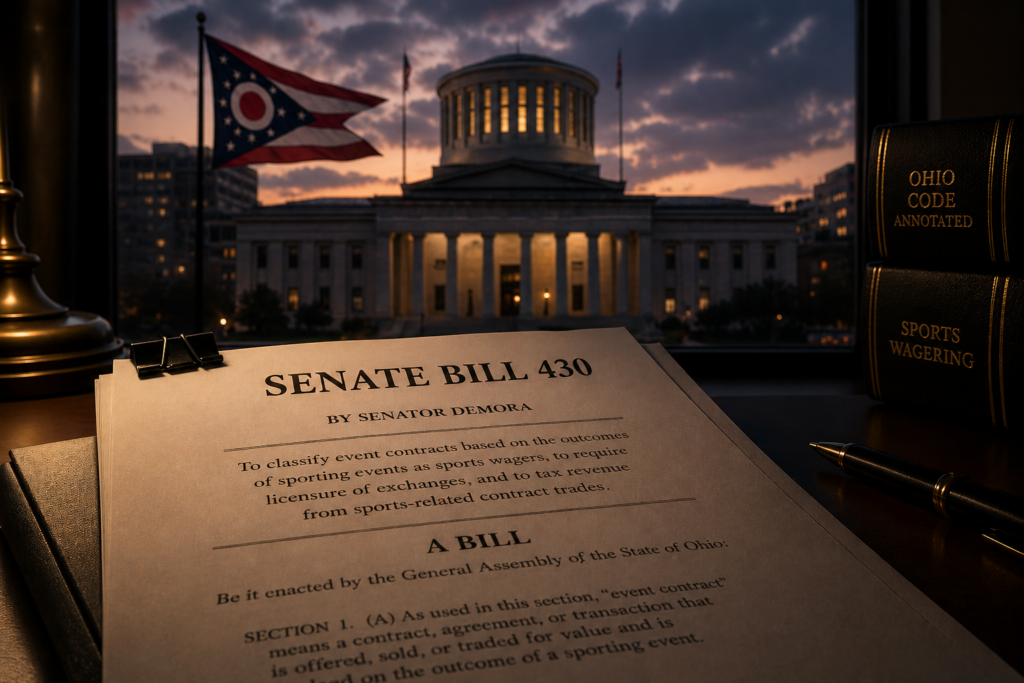
Ohio Prediction Markets Bill Targets Sportsbook Rules
Sports prediction contracts have moved from policy niche to gambling fight fast, and that matters if you bet, operate, or track US gaming law. The Ohio prediction markets bill is a direct shot at platforms that let users trade event outcomes, especially when those outcomes look a lot like sports wagers. Ohio already has a legal sports betting market with licensing, compliance checks, and tax rules. Lawmakers now seem to be asking a blunt question: if a product walks and talks like sports betting, why should it sit outside that system? That question could shape how states treat Kalshi-style markets, how gaming regulators defend their turf, and how operators plan expansion. For bettors, the issue is simpler. The rules may soon decide where you can place these bets, who oversees them, and how much scrutiny the product gets.
What to watch
- The bill would treat certain sports-related prediction markets like sportsbooks, bringing them under Ohio gambling rules and taxes.
- Regulatory control is the real fight. State gaming agencies and federally regulated prediction market platforms are pushing at the same boundary.
- Operators could face licensing and tax exposure if they offer sports event contracts in Ohio.
- Bettors may see fewer options or clearer protections, depending on how the state draws the line.
What is the Ohio prediction markets bill trying to do?
At its core, the Ohio prediction markets bill appears aimed at closing what lawmakers see as a gap. If a platform offers contracts on sports outcomes, the state may want that activity regulated the same way as online sportsbooks.
That means potential licensing demands, tax collection, enforcement powers, and consumer protection standards. Think geolocation, age checks, integrity monitoring, and the reporting rules sportsbooks already know well.
Look, this is not a small paperwork tweak. It is a jurisdiction fight over who gets to define sports betting in the first place.
If Ohio classifies sports event contracts as sportsbook activity, platforms could face the same compliance burden and tax structure as traditional betting operators.
Why Ohio prediction markets bill debate matters beyond Ohio
Ohio is not operating in a vacuum. States across the country have watched prediction market platforms edge closer to sports-style products, while the Commodity Futures Trading Commission sits on the federal side of the map.
That split has created tension. State regulators argue that sports betting is a state-licensed gambling product. Prediction market operators argue that event contracts can fall under federal commodities oversight. Who wins that argument? It may depend less on theory and more on how aggressively states write and enforce new laws.
The stakes are real because Ohio is a sizable betting market. If a major state pushes sports contracts into the sportsbook bucket, other legislatures may copy the playbook.
How sportsbooks and prediction markets differ on paper
On paper, sportsbooks and prediction markets are built on different legal frames. Sportsbooks take wagers under state gaming law. Prediction markets structure trades as contracts, often with a yes-or-no result tied to an event.
But the user experience can look awfully similar. You put money down on an outcome. The event happens. You either win or lose. To many lawmakers, that is the ballgame.
It is a bit like calling a tomato a fruit in a botany class, then trying to sell it in a fruit salad. Technically clever, maybe. Commercially and politically, tougher.
Where the overlap gets messy
- Contracts tied to game winners, player performance, or tournament results
- Real-money exposure that mirrors fixed-odds betting behavior
- Consumer confusion about whether gaming or federal market rules apply
- Questions around integrity monitoring and responsible gambling controls
What the Ohio prediction markets bill could mean for operators
If this bill advances, operators may need to rethink product design in Ohio. A platform that currently treats sports event contracts as a federally supervised product could face a state view that says, no, this is sports wagering.
That creates a short list of headaches.
- Licensing risk. Operators may need an Ohio sports betting license or a local partner.
- Tax exposure. Revenue from these contracts could be taxed like sportsbook revenue.
- Enforcement pressure. State regulators may send cease-and-desist orders or pursue other actions.
- Product limits. Platforms may pull sports-linked contracts in the state rather than fight.
Honestly, the tax question may be the quiet engine here. States do not build sports betting frameworks just to watch lookalike products sit outside the tent.
What this means for bettors in Ohio
If you are a user, the practical effects matter more than the legal philosophy. You want to know whether a platform is legal, what protections exist if something goes wrong, and whether the market is fair.
A stricter Ohio approach could narrow access to some prediction contracts. But it could also push more activity into systems with known standards for age verification, dispute handling, and integrity checks. That trade-off is the whole debate.
Clarity helps.
And for bettors, clarity usually beats gray-market confusion.
The bigger regulatory fight behind the bill
This is also about turf. State gaming regulators spent years building sports betting systems after the fall of PASPA. They license operators, monitor unusual activity, and collect taxes. They are not likely to welcome a parallel channel for sports event speculation that bypasses those structures.
Prediction market advocates make a different case. They argue these contracts can serve price discovery, hedging, or broader market participation. That argument may carry more weight for elections, economics, or weather. Sports is tougher. Sports already has a mature gambling framework, and that makes any workaround look more deliberate.
State lawmakers are signaling that sports-related event contracts may not get special treatment just because they use different legal packaging.
What to watch next on the Ohio prediction markets bill
The next phase will likely come down to definitions, enforcement, and political appetite. Small wording changes can decide whether a bill hits only obvious sports contracts or sweeps more broadly.
Watch these points closely:
- How the bill defines prediction markets and sports event contracts
- Whether Ohio regulators get explicit enforcement power
- How operators respond, especially if they adjust offerings before final action
- Whether other states introduce copycat bills
For the wider industry, this feels like the early innings. A few states could test hard lines, courts may get involved, and federal-state boundaries may become clearer only after a messy stretch.
The next pressure point
The Ohio prediction markets bill is a reminder that legal labels only go so far. If lawmakers think a product functions like sports betting, they will try to regulate it that way and tax it that way too. That is the simple version.
So here is the real question. Will prediction market operators adapt to state gaming rules, or keep forcing a federal-versus-state showdown? The answer will shape far more than Ohio.