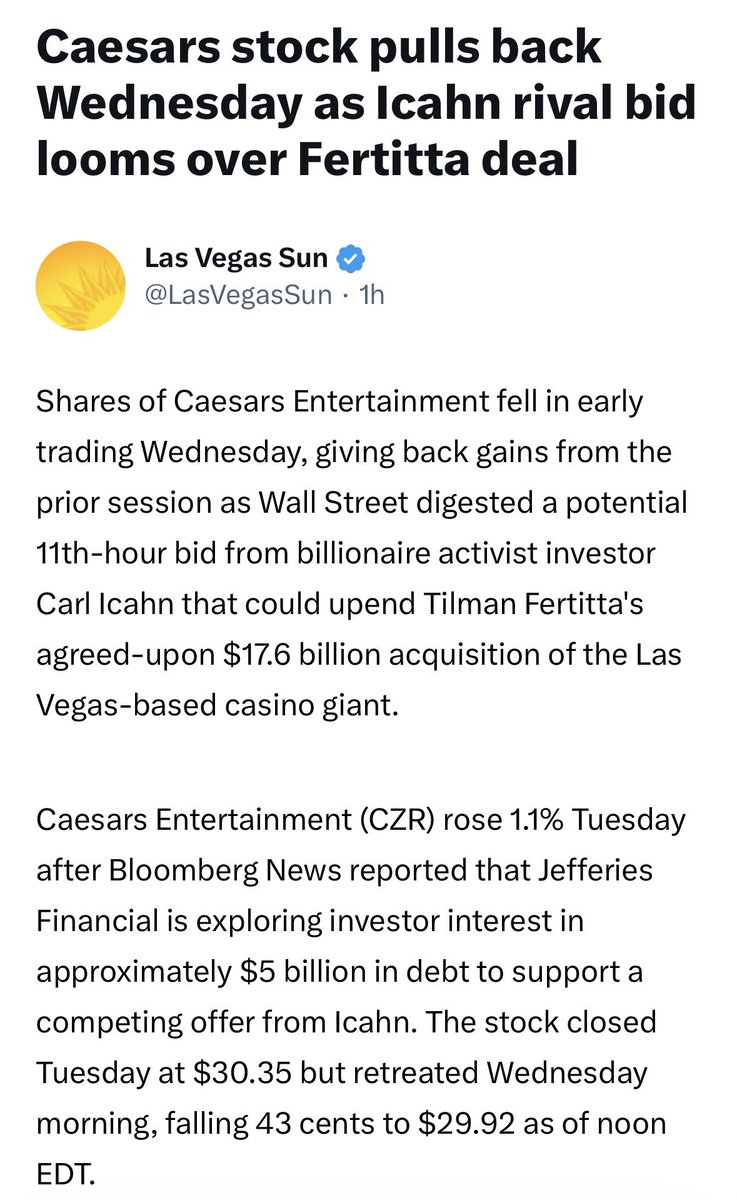
Icahn’s Caesars Bid Looks Slim as Time Runs Out
Carl Icahn has built a career on late moves and tough bets, but the latest Caesars bid talk looks far less likely to land than the headlines suggest. The issue is simple. The window is tight, the asset is heavy with debt, and any buyer would need to justify a price that already has plenty of market scrutiny. Why does this matter now? Because investors tend to treat takeover chatter like free optionality, when in reality these situations often collapse under financing pressure, board resistance, or plain bad timing. Look, a deal like this is not a poker hand you can bluff through. It is more like building a bridge while traffic is still moving across it.
- Timing is the first problem. A late-stage bid has less room for due diligence, financing, and board engagement.
- Caesars carries real weight. Debt and operating complexity make valuation harder than a clean take-private story.
- Market skepticism is rising. Investors are less willing to price in takeover premiums without hard signals.
- Icahn’s style helps, but only so much. Activism can pressure outcomes, but it does not erase capital structure math.
Why the Caesars bid is hard to pull off
Icahn knows how to force a conversation. He can buy a stake, stir the market, and push management toward action. But a Caesars bid is a different animal. Caesars Entertainment is not a simple underappreciated asset with one obvious fix. It is a sprawling gaming operator with debt obligations, state-by-state regulatory exposure, and a balance sheet that changes the pricing equation fast.
That is where the story starts to wobble. Any credible bid would need financing that lenders can live with and a valuation that does not punish the buyer on day one. If the offer is too low, the board pushes back. If it is too high, the return profile gets ugly. And if the timing slips, the market has already moved on.
Takeaway: A flashy bid sounds aggressive. A financed bid that clears regulatory and valuation hurdles is the real test, and that bar is much higher.
What Icahn can do, and what he cannot
Icahn remains a feared activist because he can change the conversation quickly. He can pressure a board, amplify shareholder frustration, and make a deal feel more urgent than management would like. But he cannot suspend the rules of capital structure. He cannot make debt disappear. He cannot force lenders to ignore risk (no matter how much noise surrounds the name).
Could he still force a partial outcome, like strategic review pressure or a payout-friendly move? Sure. That is more plausible than a clean full takeover. In these situations, activists often win influence without winning control. That may sound less dramatic, but it is how a lot of real money gets made.
Caesars bid risks in plain English
For readers tracking the deal angle, the risks are not mysterious. They are the same ones that kill a lot of late M&A runs.
- Financing risk. High leverage makes lenders cautious, especially if market conditions tighten.
- Regulatory friction. Gaming deals draw extra scrutiny because licenses matter.
- Valuation mismatch. Sellers want a premium, buyers want upside, and both cannot get what they want.
- Execution risk. The longer a process drags, the more likely it is to break.
And that is before you account for the broader casino sector. Operators have been dealing with cost pressure, shifting consumer habits, and a constant need to protect margins. A takeover premium looks nice on a slide deck. It gets less charming when the buyer has to carry the debt and defend the numbers quarter after quarter.
What investors should watch next in the Caesars bid
The market usually tells you when a rumored deal is real. You see stake disclosures. You see financing chatter from credible banks. You see board language that starts to shift from dismissal to review. Without that, the noise stays noise.
Pay close attention to whether Icahn adds to his position, whether Caesars responds with any formal process language, and whether any outside suitor appears. Those are the signals that matter. Everything else is just market theater.
If the bid never comes, the market will still have learned something. It will have seen how little room there is for late, leveraged moves in a sector that already runs hot with debt and regulation.
Where this leaves the deal story
The smart money should treat a full Caesars bid with caution. Icahn can create pressure, but pressure is not the same as purchase power. The odds look slim because the financing, timing, and governance hurdles all point in the same direction.
That makes the next move more interesting than the rumor itself. Does Icahn push for influence, or does he keep dangling the threat of a bid to shape the price? That question, not the headline, is what investors should be watching now.


.jpg)