
UKGC gambling harm data shows wider impact
If you work in gambling policy, safer gambling, or player protection, the latest UKGC gambling harm data should get your attention fast. The headline is blunt. Nearly one in eleven adults in Great Britain say they have been affected by someone else’s gambling in the past year. That matters because harm does not stop with the person placing the bet. It spreads into households, friendships, workplaces, and finances. And if regulators keep seeing gambling through a narrow customer-only lens, they will miss the real footprint of the issue. The data, reported by the UK Gambling Commission and covered by iGB, adds fresh pressure on operators and policymakers to measure harm in a wider, more honest way. So what does this actually change for the industry, and what should you watch next?
What stands out in the UKGC gambling harm data
- Nearly one in eleven adults in Great Britain reported harm from another person’s gambling.
- The figures push the debate beyond individual players and toward affected others, including family and close contacts.
- Operators may face stronger expectations around early intervention, affordability signals, and customer support pathways.
- Policymakers now have stronger grounds to frame gambling harm as a public health issue, not just a consumer issue.
Why this UKGC gambling harm data matters
The core point is simple. Gambling harm can be second-hand.
That sounds obvious, but the industry has often treated it as a side issue. Most compliance systems focus on the account holder, the spend pattern, the source of funds, and the direct customer interaction. Fair enough. But this new evidence shows the blast radius is wider than that model admits.
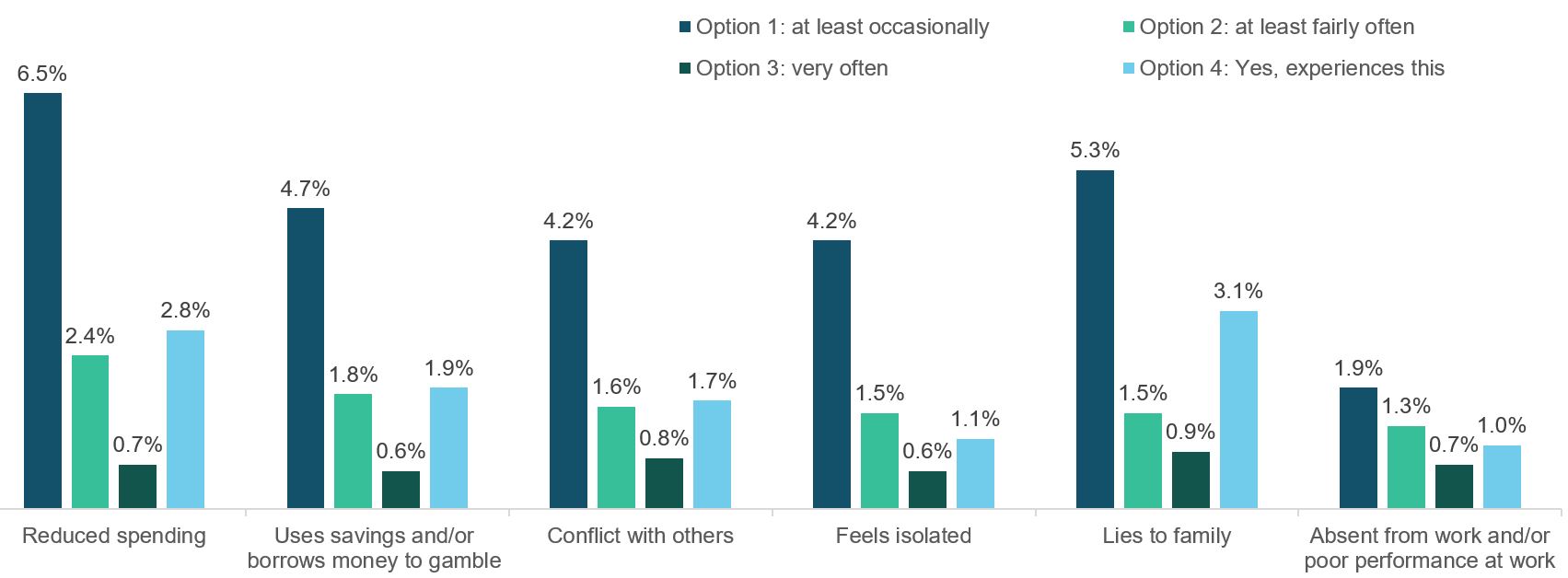
According to the UK Gambling Commission findings cited by iGB, nearly one in eleven adults in Great Britain were negatively affected by someone else’s gambling over the previous 12 months. That is a large group, and it changes the frame. You are no longer looking only at an at-risk player segment. You are looking at a broader social impact count that reaches well beyond active gamblers.
Gambling harm is rarely a closed loop between operator and player. It often lands on partners, children, relatives, friends, and co-workers.
Look, this is where industry messaging gets stress-tested. If a business says it takes harm seriously, that claim has to extend to affected others too. Anything less feels thin.
Who counts as an affected other?
The phrase matters because it can sound clinical. In practice, it means real people dealing with another person’s gambling fallout. Think partners covering missed bills, parents lending money they will not get back, or colleagues picking up work after someone spirals.
And the harm is not only financial.
It can include stress, conflict, reduced trust, emotional strain, lost sleep, and pressure at home. In severe cases, it can be tied to debt, family breakdown, and mental health problems. If that sounds more like public health than a narrow product-risk debate, that is because it is.
There is an easy analogy here. A house fire does not only damage the room where it starts. Smoke spreads through the building, and the people upstairs feel it first.
What the numbers could mean for operators
Operators should read this data as a signal, not a headline to skim past. If evidence of broader social harm keeps building, compliance expectations are likely to move with it. Some of that shift may be formal regulation. Some will be softer pressure from licensing teams, public health groups, and political stakeholders.
Here are the likely pressure points.
- Customer interaction models may need a wider lens. Safer gambling teams already look for markers like spend spikes, longer sessions, and repeated failed deposits. But if the policy debate sharpens around affected others, operators may need better pathways for third-party concerns and family contact protocols where legally appropriate.
- Support journeys may need redesign. Many sites offer help for the player. Fewer make it easy for a partner or family member to find practical support. That gap now looks harder to defend.
- Board reporting could get tougher. If harm reporting remains focused on direct customer cases, senior teams may be missing part of the picture. Investors and regulators tend to notice blind spots eventually.
- Product and marketing scrutiny may intensify. Why? Because if harm is shown to ripple outward, the tolerance for high-intensity design and aggressive reactivation can drop fast.
What policymakers are likely to do with this UKGC gambling harm data
The political value of these findings is obvious. Data on affected others helps policymakers argue that gambling harm is a broader social issue with external costs. That supports stronger intervention. It also gives campaigners a clearer case for cross-government involvement, including health, education, debt advice, and local services.
Honestly, this is where the debate gets uncomfortable for parts of the industry. Public health framing tends to widen both accountability and oversight.
That does not mean every new restriction is smart policy. Some proposals will still be clumsy. But the momentum is clear. Evidence that harm reaches non-gamblers can shift how future consultations, license conditions, and treatment funding debates are shaped.
How to read the data without stretching it
Good analysis means staying precise. One survey result, even a strong one, does not answer every question. You still need to ask how harm was defined, how respondents were sampled, and what degree of impact was captured. Being affected by someone else’s gambling can cover a broad range of experiences.
But that does not weaken the finding.
It simply means serious readers should avoid two bad habits. First, downplaying the result because it is inconvenient. Second, inflating it into claims the research did not make. The useful middle ground is to treat it as solid evidence that indirect gambling harm is widespread enough to demand attention now.
Practical steps for safer gambling teams
If you sit inside an operator, trade body, or advisory group, there are a few sensible moves you can make next.
- Audit support pages to see whether affected others can find help in under a minute.
- Review escalation routes for reports from family members or close contacts.
- Train frontline staff on how indirect harm may show up in complaints, affordability checks, or customer contacts.
- Track outcomes instead of just recording interactions. Did the intervention change anything?
- Prepare for tougher questions from regulators, journalists, and public health stakeholders.
This is not about panic. It is about being less naive.
Where the debate goes next
The most interesting question is not whether affected others matter. That part is settling. The real question is how far regulation and operator practice will adapt to reflect that reality.
If the gambling sector keeps talking about responsibility while measuring only direct player outcomes, it will look like a builder inspecting one cracked wall while the foundation shifts underneath (and everyone else in the room can see it). That disconnect is hard to sustain.
Expect the next phase of scrutiny to focus on how companies identify social spillover, how support systems serve families, and whether official harm metrics catch the problem at its true scale. The smart firms will move before they are forced to. The rest may wait for the next set of numbers, and by then the policy mood could be far less forgiving. What side of that line do you want to be on?

)