NCAA’s Failed TRO Bid Against DraftKings Signals a New Line on College Props
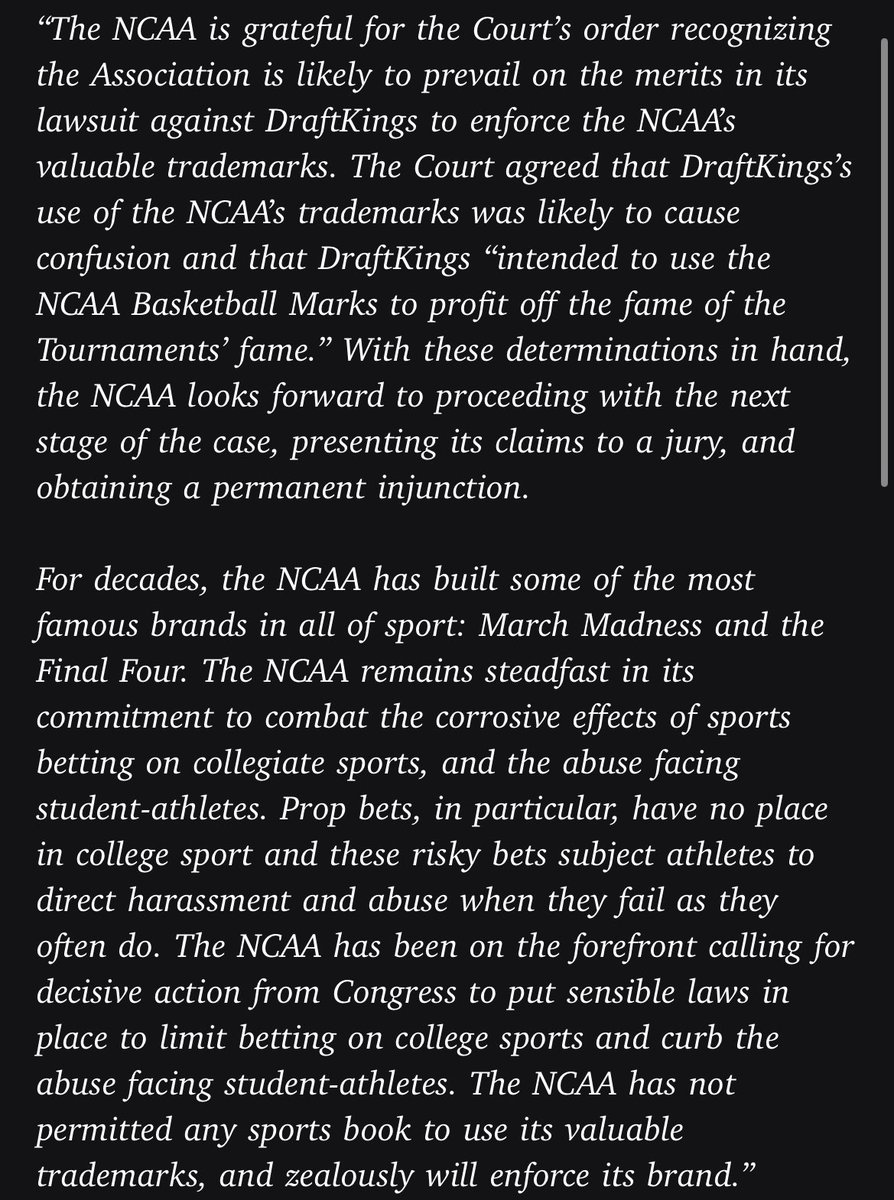
The NCAA tried to pull the emergency brake on DraftKings’ college player props and lost. That matters because regulators, sportsbooks, and campus compliance offices now have a clearer view of how courts treat NCAA requests to curb betting markets. The judge’s refusal to grant a temporary restraining order leaves DraftKings’ college offerings in play for now and raises hard questions about the NCAA’s enforcement reach versus state-approved wagering products. If you run a book, set policy for a campus, or track integrity risks, this is the moment to reassess where legal authority begins and ends. The mainKeyword NCAA DraftKings temporary restraining order is not just legal jargon; it is the fault line between commercial betting rights and athlete welfare.
What matters now
- Judge denied the TRO, keeping DraftKings’ college props live while the case proceeds.
- NCAA framed the products as threats to athlete safety; the court wanted stronger evidence.
- State approvals and operator compliance programs weighed against emergency relief.
- Expect more pressure on lawmakers to clarify college prop boundaries.
“Without concrete harm, emergency relief is a high bar to clear,” one sports law professor told me after the hearing.
Why the NCAA missed on the NCAA DraftKings temporary restraining order
The court looked for immediate, irreparable harm and did not see it. That single sentence says a lot. The NCAA argued that college props invite harassment and integrity risks, but the filing lacked fresh incidents tied directly to DraftKings’ offerings. Think of it like chess: you do not get to call checkmate just because the board looks dangerous; you need a piece in striking distance.
DraftKings countered that its props are legal under state frameworks and that its integrity monitoring and player safeguards are active. The judge weighed those systems against the NCAA’s claims and declined to freeze the market.
Regulatory takeaways for operators
If you operate a sportsbook, this ruling is a signal to tighten your paper trail. Document how you screen college props, how you limit bet sizes, and how you respond to player complaints. Regulators will ask. And courts will expect more than broad fears.
- State alignment: Keep offerings synced with state lists and fast-track removals when regulators request changes.
- Integrity vendors: Show how alerts lead to action, not just reports.
- Education: Offer athletes and staff a direct line to flag harassment; log responses.
One crisp paragraph can change a hearing.
What this means for schools and athletes
Campus leaders should not assume the court fight protects players. Build a playbook: clear reporting channels, rapid coordination with sportsbooks, and public guidance for athletes on handling unwanted contact. It is closer to a basketball full-court press than a half-court set; pressure must be sustained and coordinated.
Parents and athletes will ask: are props going away? Not yet. So act as if they stay.
Where lawmakers might step in on the NCAA DraftKings temporary restraining order saga
Several states already ban college player props. Others are now under the spotlight. Expect bills that narrow prop menus or add enforcement teeth. Look, lawmakers move when headlines combine legal uncertainty with athlete safety. The next session could see quick committee hearings, and operators will need to testify with data, not platitudes.
Next steps for the industry
- Audit your college prop catalog against the latest state directives.
- Refresh integrity protocols and publish a summary for regulators.
- Coordinate with university compliance officers to align reporting flows.
- Prepare a playbook for rapid adjustments if the litigation shifts.
Looking ahead
Courts just reminded the NCAA that urgency requires evidence. Will the next filing bring the receipts?