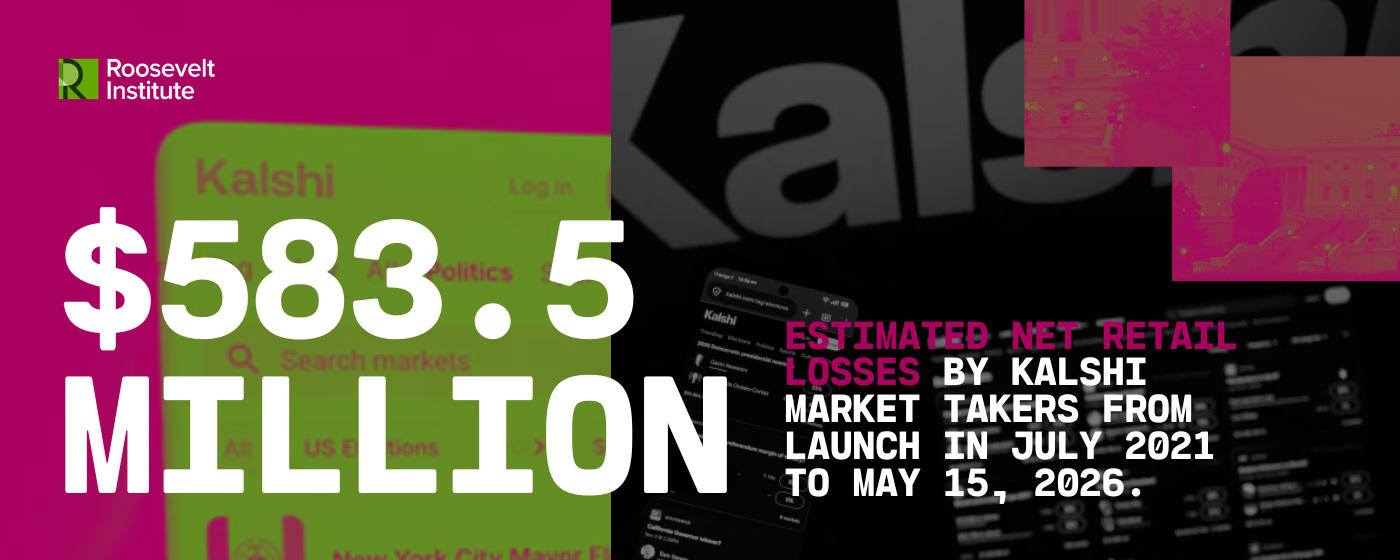
Kalshi Pushes Back on Retail Loss Report
Kalshi is back in the middle of a familiar fight. A new report claimed retail users on the prediction market platform lost $583 million, and that number is already doing the rounds for all the wrong reasons. If you follow Kalshi, prediction markets, or the broader debate over sports and event contracts, this matters because the headline number can shape how regulators, users, and investors judge the business. Kalshi retail losses are now part of a bigger argument about whether these markets behave like trading tools, speculative products, or something in between.
Look, this is not just a PR spat. It is a dispute over framing, methodology, and who gets counted as a winner or loser. And that distinction matters a lot more than the headline suggests.
What the Kalshi retail losses report is really claiming
The report says retail users on Kalshi have collectively lost hundreds of millions of dollars. That sounds blunt, because it is meant to. But numbers like this can hide a lot of context, especially in a market where users may trade for hedging, speculation, or simple event exposure.
Kalshi is challenging that framing. The company says the report does not capture the full picture of how its market works, and it disputes the idea that retail user losses can be reduced to one clean number. That is a fair point, at least on the surface. How do you define a loss in a market where contracts can be offset, held briefly, or used as part of a larger portfolio?
“A headline number can be accurate in one narrow sense and still be misleading in practice.”
The answer depends on the methodology. And methodology is where a lot of these stories either hold up or fall apart.
Why Kalshi retail losses are so hard to measure cleanly
Prediction markets are not a neat casino ledger. They can look like betting, but they also resemble short-term trading. Some users buy contracts for a few cents and sell before settlement. Others hold until the event ends. Some trade on information. Some trade on instinct. Some are effectively speculating on news flow in real time.
That makes aggregate loss figures tricky. A report may count realized losses without fully accounting for open positions, hedges, or the difference between active traders and casual users. It may also blur retail activity with broader market activity (which is a problem if you want a clean read on user behavior).
Why does that matter? Because if you are trying to assess consumer risk, you need more than a raw loss total. You need turnover, repeat participation, holding periods, and whether users keep coming back after losses. Without that, the number is a hammer looking for a nail.
What Kalshi is defending
Kalshi is defending more than a balance sheet talking point. It is defending the idea that event contracts have legitimate uses beyond pure wagering. That case matters because the company has spent years trying to position itself as a regulated exchange, not a sportsbook dressed up in different clothes.
For Kalshi, a retail loss report can feed the argument that prediction markets mainly extract money from users. That is a hard narrative to shake, especially if the platform wants broader acceptance from regulators and mainstream finance. The company needs the market to look disciplined, not predatory.
Think of it like a kitchen with sharp knives. One report can show injuries. But it does not tell you whether the chef is careless, the tools are useful, or both. Context changes the story.
Where the argument gets sharpest
- Consumer protection: Regulators care whether retail users understand the risks.
- Market design: Small contract sizes can still generate large cumulative losses if activity is high.
- Public perception: A big loss number can make a young market look worse than it is.
- Business model: Kalshi needs credibility if it wants to expand beyond a niche audience.
What this means for prediction markets
The bigger story is not one company’s rebuttal. It is whether prediction markets can survive public scrutiny once the money trail gets clearer. These platforms have grown by promising a cleaner, more information-rich alternative to traditional betting. But if retail users are losing heavily, critics will ask a simple question. Is the market informative, or just expensive?
That question is going to hang over the sector for a while. Kalshi is one of the most visible names in the space, so anything tied to its user economics will echo beyond its own platform. Other operators, and even would-be competitors, will feel the pressure.
The practical issue is trust. If users think the market is stacked against them, they will back away. If regulators think the platform is functioning like a gambling product without the right guardrails, they will push harder. Either way, the debate is moving from theory to numbers.
How readers should read reports like this
- Check whether the report measures realized losses, unrealized losses, or both.
- Look for the time frame. A month, a quarter, and a full year can tell very different stories.
- Ask whether the report separates active traders from casual users.
- See whether offsets, hedges, and contract resale are included.
- Compare the claims with company disclosures, if they exist.
That is the basic due diligence here. Anything less, and you are just reacting to a splashy number.
Kalshi may be right that the $583 million figure oversimplifies the market. It may also be true that retail users are taking real losses at a scale the company would rather not advertise. Both can be true at once. And that is exactly why the fight matters.
What happens next for Kalshi retail losses
The next phase will be about evidence, not slogans. Kalshi will likely keep pressing its own framing, while critics will keep using the loss figure to question the platform’s social value. That back and forth is not going away soon.
If prediction markets want a serious future, they need cleaner reporting and better public explanations. Otherwise, every new headline will look like the last one. And the market will keep paying for that confusion.
So the real question is simple. Can Kalshi prove that its users are participating in a market, not just feeding a churn machine?