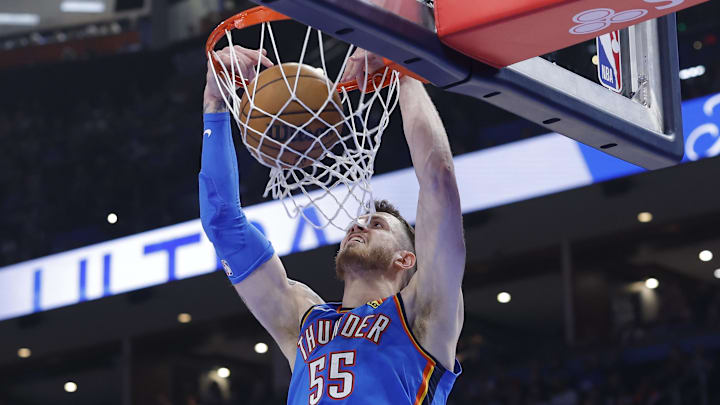
Isaiah Hartenstein Role Change Could Swing Thunder Series
The Oklahoma City Thunder may need a different version of Isaiah Hartenstein in the next round, and that matters more than it sounds. A playoff series can turn on one tactical shift, especially when matchups get tighter and every possession gets picked apart. The big question is simple. Can an Isaiah Hartenstein role change give the Thunder enough flexibility without dulling what already works?
That is the pressure point now. Oklahoma City has leaned on speed, spacing, and defensive pressure all year, but postseason basketball keeps forcing coaches to adjust. One opponent might need rim protection and extra rebounding. Another might drag centers into space and test their foot speed. Hartenstein sits right in the middle of that chess match, and his next assignment could shape how far this team goes.
What to watch
- Hartenstein’s role may shift from steady starter minutes to a matchup-based assignment.
- His rebounding, screening, and interior defense still give the Thunder a real edge.
- Spacing and defensive mobility will decide how long he stays on the floor.
- One smart adjustment by Mark Daigneault could change the tone of the series.
Why the Isaiah Hartenstein role change matters
Look, playoff basketball is ruthless about weaknesses. What works in one series can look clunky in the next. That is why the Isaiah Hartenstein role change is worth tracking right away.
Hartenstein gives Oklahoma City size, screen setting, offensive rebounding, and paint defense. Those are not small things. They are the kind of dirty-work traits that win ugly possessions in May. But if the next opponent plays five-out, hunts switches, or forces bigs to defend far from the rim, the Thunder may need him in shorter bursts or in more targeted situations.
That does not mean he becomes less valuable.
It means his value gets more specific. Think of it like a baseball bullpen. You still trust the pitcher, but the inning and matchup matter more than the raw talent on the card.
Playoff rotations are rarely about who is better in a vacuum. They are about who solves the problem in front of you.
What Hartenstein still does well for Oklahoma City
If his role shifts, it should not erase the parts of his game that travel in any series. And there are several.
Screen setting that frees the stars
Oklahoma City’s offense depends on creating driving lanes for Shai Gilgeous-Alexander and clean decision points for its ball handlers. Hartenstein helps by setting hard screens and making defenders choose. Go over the pick and Shai gets downhill. Switch it, and the Thunder can attack the mismatch.
Those screens are easy to miss on a stat sheet. They still bend a defense.
Rebounding that ends chaos
The Thunder have improved on the glass, but Hartenstein remains one of their steadier answers around the rim. Defensive rebounds finish possessions. Offensive rebounds create second shots and wear down opponents. In a playoff game, that can feel like a body blow in the fourth quarter.
Interior defense and passing feel
He also gives Oklahoma City a calm presence in the paint. He contests shots, protects space, and can keep the ball moving as a passer from the elbows or short roll. That last piece matters more than casual fans think. A center who can make the next read keeps an offense from stalling.
Where the Isaiah Hartenstein role change gets tricky
Here is the other side. Some opponents will try to make Hartenstein defend in space over and over, and they will do it until the Thunder prove they can survive it.
That usually shows up in a few ways:
- Pulling him into pick-and-roll actions far from the basket
- Using stretch bigs to open the lane
- Forcing quick decisions in transition
- Testing whether Oklahoma City wants to switch, hedge, or drop
If that pressure starts breaking the defense, Mark Daigneault could trim Hartenstein’s minutes, use him against second units, or pair him with lineups built to cover more ground around him. That is not panic. It is playoff math.
Honestly, this is where coaching earns its salary. Regular-season habits are nice. Series-to-series flexibility is non-negotiable.
How Mark Daigneault could use him differently
The smartest version of this adjustment is not benching Hartenstein for the sake of optics. It is using him with intent.
Option 1: Lean into matchup windows
Daigneault could target the minutes when the other team plays a more traditional center or a reserve unit that struggles on the glass. That lets Hartenstein punish weaker rebounding groups and anchor the paint without being stretched thin every trip.
Option 2: Make him a tone-setter early
There is also a case for starting him, even if his total minutes dip. A physical opening stretch can settle the Thunder, protect the rim, and create cleaner looks for the offense. Then the team can pivot later if the matchup turns.
Option 3: Use him as a possession winner
Some games get ragged fast. Missed shots. Loose balls. Long rebounds. That kind of game can suit Hartenstein, because he helps Oklahoma City win the scraps. And playoff games often come down to scraps.
What the next series will ask from Hartenstein
The answer depends on the opponent, but the checklist is fairly clear. Can he defend without getting dragged into bad switches? Can he keep the boards under control? Can he help the Thunder stay organized when possessions get ugly?
If he does those three things, his role stays solid even if it looks different from round to round. If not, Oklahoma City has enough lineup versatility to move in another direction.
That is the real story here. The Thunder are deep enough to ask hard questions about every rotation spot, which is a luxury most playoff teams do not have. Hartenstein is part of that strength, even if the next series asks him to play fewer minutes, different minutes, or more specialized minutes (which is often how playoff trust really works).
Why this could help the Thunder, not hurt them
Fans often hear “new role” and assume trouble. I do not buy that. Good teams change shape in the playoffs. The best ones do it without ego.
Oklahoma City has built a roster that can toggle between speed and size. That gives Daigneault options, and options are gold this time of year. If Hartenstein becomes more of a situational weapon than an every-possession fixture, that may be a sign of smart team-building rather than any flaw in his game.
A role change in the playoffs is not always a demotion. Sometimes it is the cleanest path to winning four games.
The next thing to watch
The next Thunder game should tell you plenty within the first few rotations. Watch where Hartenstein catches the ball, who he is defending, and whether Oklahoma City keeps him near the rim or asks him to survive farther out. That will reveal the plan fast.
And if his minutes shift, do not get stuck on the box score. Watch the fit. In a playoff series, one adjusted role can matter more than one big stat line. The Thunder may be about to test that idea in real time.