Illegal Online Gambling Market Hits $5.9 Trillion
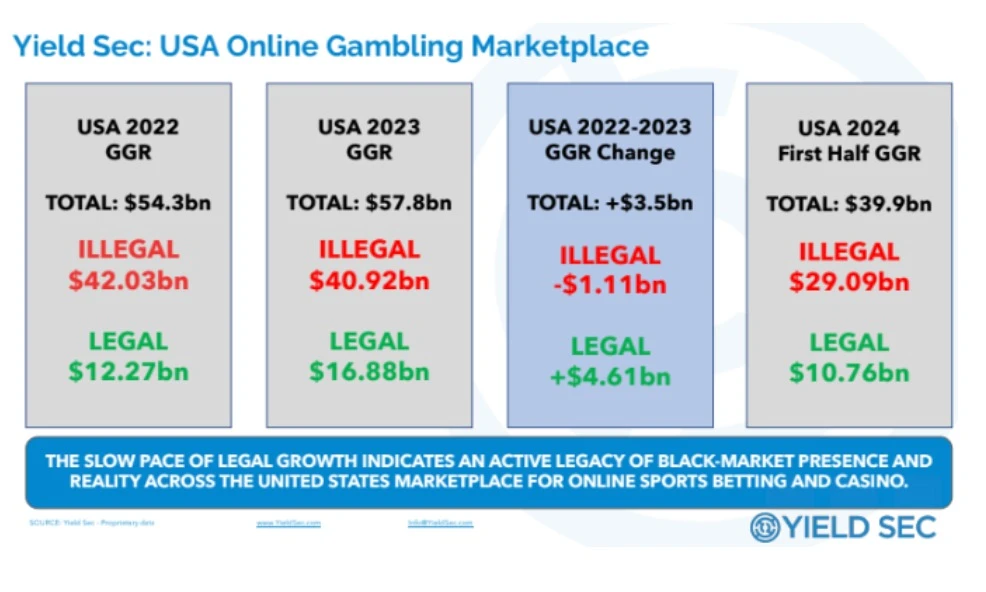
You are not looking at a fringe problem anymore. The illegal online gambling market is now so large that it rivals the GDP of the world’s biggest economies, according to data highlighted by the Campaign for Fairer Gambling and reported by Casino.org. That matters right now because every dollar pushed into offshore sportsbooks, black market casinos, and unlicensed betting apps is a dollar that escapes tax rules, player protections, and anti-money laundering checks. Regulators talk a big game about channelization, but the numbers suggest many legal systems are still leaking badly. If you work in betting, payments, compliance, or policy, this is the figure you cannot ignore. And if the legal market keeps moving too slowly, what do you think players will do?
What stands out
- The illegal online gambling market is estimated at $5.9 trillion in annual handle.
- That scale would make it the world’s third-largest economy if treated like a national GDP comparison.
- Unlicensed operators often win on speed, product access, and lighter friction at signup and payment.
- Legal operators and regulators face a blunt question: why is so much demand still going offshore?
Why the illegal online gambling market keeps growing
Look, black market growth does not happen by accident. It usually follows a simple pattern. Players want easy access, fast payouts, broad market coverage, and fewer restrictions. Offshore sites are often built to provide exactly that, even when they ignore consumer safeguards.
Legal markets, by contrast, can become bloated with friction. ID checks take too long. Deposit limits feel arbitrary. Product catalogs are narrower. In some regions, advertising rules tighten while enforcement against illegal sites stays patchy. That is like building a stadium with strict ticketing at the front gate while leaving a hole in the fence around the side.
The result is predictable.
Consumers do not always choose the safest option. They often choose the fastest one.
What the $5.9 trillion figure actually means
The number cited in the Casino.org report refers to estimated annual handle, not operator revenue. That distinction matters. Handle is the total amount wagered, while gross gaming revenue is what operators keep after paying out winnings. People often mix those up, and it distorts the scale of the issue.
Still, even on a handle basis, $5.9 trillion is seismic. It signals a market that is not living in the shadows anymore. It is operating at global-system scale, with reach across sports betting, online casino, crypto-linked gambling, and gray-market affiliates.
“If legal gambling is meant to replace illegal gambling, the current numbers suggest the job is far from done.”
Where legal operators are losing the fight
Payments and cash-out speed
Payment friction remains one of the biggest weak spots in regulated gambling. If a player can deposit in seconds on an offshore site but waits hours or days for verification in a licensed app, the licensed app has already lost part of the battle.
And yes, compliance matters. But user experience matters too.
Product restrictions
Some regulated markets limit in-play betting, bonus structures, stake sizes, or casino features so aggressively that users drift elsewhere. There is a policy case for some of those controls. But when controls become clumsy, they can push traffic toward operators with zero meaningful guardrails.
Weak enforcement
Many jurisdictions regulate licensed brands heavily while doing far less to disrupt illegal competition. That is backwards. A strict rulebook means little if black market sites keep getting traffic, payment access, affiliate support, and app distribution.
Illegal online gambling market risks for players and regulators
The illegal online gambling market is not just a tax problem. It is a consumer risk problem. Unlicensed sites may ignore safer gambling rules, dispute resolution standards, age verification, and source-of-funds checks. If a customer gets stiffed, there is often nowhere serious to complain.
Regulators also face a harder enforcement picture than they did a decade ago. Domains can shift quickly. Payment routes can hop across processors and digital assets. Marketing can flow through influencers, mirror sites, and affiliate pages that change faster than many agencies can react.
- Players face weaker protections and higher fraud risk.
- Licensed operators lose market share to firms that dodge regulatory costs.
- Governments lose tax revenue and useful betting data.
- Law enforcement faces a bigger anti-money laundering challenge.
What regulators should do next about the illegal online gambling market
Honestly, more press releases will not fix this. Regulators need a sharper playbook, and it has to hit both demand and supply.
1. Cut off payment access
This is the non-negotiable move. If illegal operators cannot process deposits smoothly, their conversion rates drop. That means tighter work with banks, card schemes, e-wallets, and payment gateways.
2. Make legal onboarding less painful
Regulated operators should not be forced into clunky customer journeys where every new user feels treated like a suspect. Strong KYC can still be fast if systems are modern and connected.
3. Enforce against affiliates and ad channels
Black market traffic rarely appears from nowhere. It is fed by search, social promotion, tipster communities, and affiliate pages. Follow the traffic sources, not just the operator brand.
4. Review overreaching product rules
Some restrictions are sensible. Some are self-defeating. Regulators should ask a blunt question: does this rule protect players, or does it simply push them offshore?
What licensed operators can learn
Licensed betting and gaming companies often frame this issue as a policing problem. It is that, but only partly. It is also a product problem, a payments problem, and a trust problem.
Operators that want stronger channelization should focus on basics first:
- Faster registration and verification
- Clearer withdrawal timelines
- Competitive odds and product depth
- Visible responsible gambling tools that do not wreck usability
- Plain-language messaging on why licensed play is safer
Here’s the thing. Many legal brands still assume a license alone is enough to win. It is not. Players compare apps the way they compare food delivery or streaming services. If one option is faster, easier, and more available, many people will pick it, even when that choice carries more risk.
What this means for the industry next
The $5.9 trillion estimate should end the lazy idea that illegal online gambling is a side issue. It is central to the future of regulated gaming. The markets that perform best over the next few years will not be the ones with the loudest policy slogans. They will be the ones that combine smart enforcement with legal products people actually want to use.
That is the real test now. Can regulators and licensed operators build systems that are safer without being slower, tighter without being self-sabotaging, and strict without becoming irrelevant?