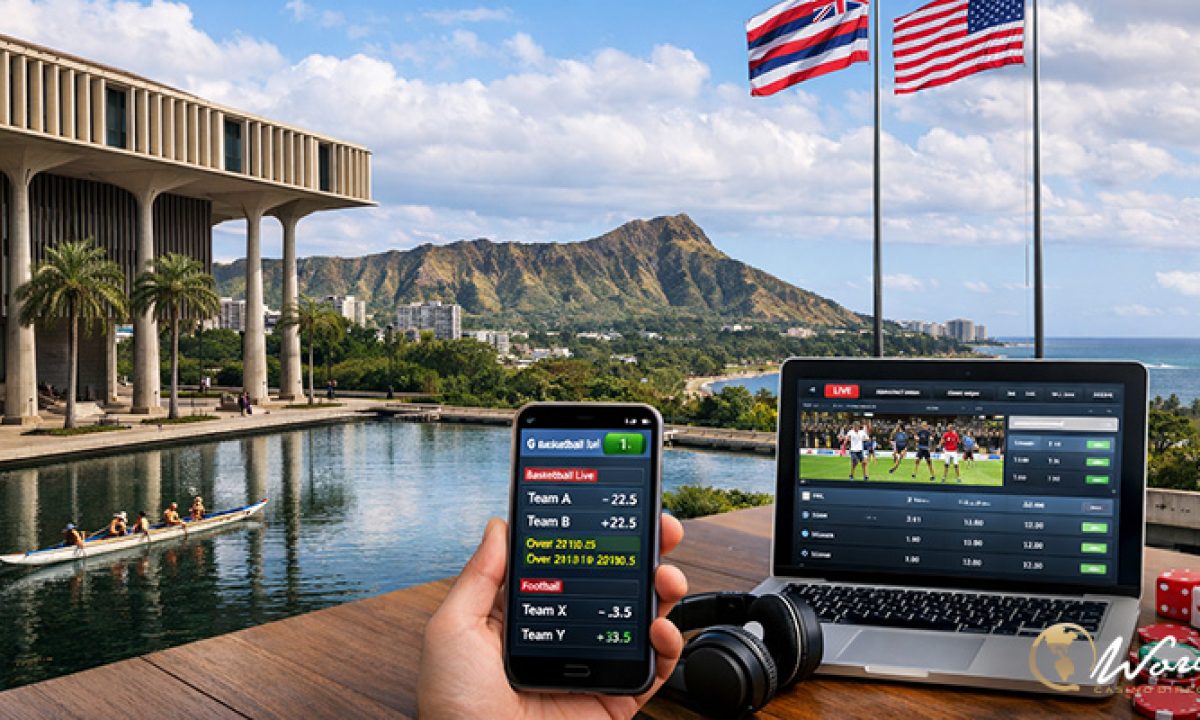
Hawaii Sports Betting Study Signals a Policy Shift
Hawaii sports betting has spent years in the category of easy headlines and hard political reality. That may be changing. A state working group studying the issue recently heard industry testimony that framed legal wagering as a consumer protection tool, a tax opportunity, and a way to pull bettors away from offshore sites that already take bets from Hawaii residents. If you follow gambling policy, this matters now because Hawaii is one of the few remaining states with a near-total ban, so even a modest shift in tone stands out. And if lawmakers move from study mode to bill drafting, the state will have to answer blunt questions about tax rates, licensing, enforcement, and whether a small market can support a regulated model that actually works.
What stands out
- Industry voices told Hawaii officials that betting already happens, just outside state control.
- Supporters focused on consumer safeguards, tax revenue, and oversight instead of hype.
- Any Hawaii sports betting bill would face tough design choices on licensing and market size.
- Political interest appears real, but a hearing is not the same thing as a path to legalization.
Why the Hawaii sports betting study matters
The recent discussion, reported by Legal Sports Report, was not a floor vote or a final committee hearing. It was a study session. That sounds procedural, but these sessions often show where lawmakers are willing to soften, push back, or test public arguments before a real bill appears.
Here is the core issue. Hawaii and Utah remain the only two states without any form of legal gambling in the usual commercial sense. That makes Hawaii an outlier at a time when legal sports betting has spread across much of the mainland after the 2018 Supreme Court decision that struck down the federal PASPA ban.
Supporters are making a simple argument: people in Hawaii can already bet through offshore operators, so the state should decide whether it wants zero control or actual rules.
That argument has worked elsewhere. It is not magic, and it does not erase moral or social concerns, but it tends to resonate with lawmakers who care about enforcement and tax collection.
What the industry told lawmakers about Hawaii sports betting
Based on the report, industry participants leaned on familiar points, though familiar does not mean weak. They argued that regulated betting can create tax revenue, build guardrails for consumers, and replace at least part of the illegal market with licensed operators that follow age checks, geolocation rules, and anti-money-laundering standards.
Look, this is the standard pitch because it is grounded in how modern US betting regulation works. Licensed sportsbooks are easier to monitor than offshore books. Payments are tracked. Complaints have somewhere to go. Problem gambling tools can be mandated instead of treated as optional marketing copy.
But Hawaii is not a standard case.
The state has a distinct political culture and a long record of rejecting gambling expansion. That means lawmakers are likely to press harder on social costs than officials in states that already had casinos, horse racing, or lottery infrastructure before sports betting arrived.
The hard questions Hawaii lawmakers will have to answer
If Hawaii moves forward, the real fight will start with market design. And market design is where good intentions often run into bad math.
1. How many licenses should the state allow?
A small market can choke itself by approving too many operators, each paying high upfront costs for a limited pool of customers. But a market with too few licenses can become stale, uncompetitive, and less attractive to bettors who can still click over to offshore sites. Think of it like opening a food hall. Too many stalls and nobody earns enough. Too few and people stop showing up.
2. What tax rate makes sense?
Lawmakers always want strong revenue numbers. Operators always want lower rates. The tension is predictable. If taxes climb too high, legal sportsbooks become less willing to spend on promotions, product quality, and local partnerships. Then the illegal market keeps its edge.
3. Will Hawaii allow mobile betting?
This is non-negotiable in practical terms. Most US sports betting handle now comes from online and mobile wagering, not retail sportsbooks. A retail-only model in Hawaii would make little sense given geography, travel patterns, and consumer habits.
4. Who regulates the market?
States that succeed usually have a clear regulator with enough staff, technical support, and enforcement power. Without that, the law can exist on paper while the market limps along in practice.
What legal sports betting could change for residents
Supporters often overstate the revenue upside, and that is where skepticism helps. Hawaii is not New York. It will not produce giant handle figures overnight, and anyone selling that story is overselling the case.
Still, legal betting could change a few things in concrete ways:
- It could give residents a legal option with age verification and dispute channels.
- It could create a tax stream, though likely a modest one compared with larger states.
- It could let the state impose responsible gambling standards such as deposit limits, self-exclusion, and ad rules.
- It could help law enforcement separate licensed activity from illegal operators more clearly.
Honestly, the consumer protection argument is the strongest of the bunch. Revenue gets attention, but regulation is the sturdier case.
What opponents are likely to say
Any serious Hawaii sports betting debate will include arguments about addiction risk, household financial strain, and the broader normalization of gambling. Those concerns are real. States with legal markets still wrestle with ad volume, responsible gambling compliance, and the speed of mobile wagering.
So the right question is not whether risk exists. Of course it does. The sharper question is whether prohibition reduces that risk when offshore books are already available to residents. That is the policy split lawmakers now seem more willing to confront.
And there is another wrinkle. Hawaii has often treated gambling as incompatible with its social priorities and public image. That stance has history behind it, and dismissing it would be sloppy reporting. A bill will need to do more than promise revenue. It will need to show discipline.
What happens next after the study session
A study group hearing does not guarantee a bill, and a bill does not guarantee passage. Plenty of gambling proposals get warm interest, then die once the details hit daylight. But hearings like this one matter because they move the conversation from abstract fear to concrete trade-offs.
If the issue advances, watch for these signals:
- Whether lawmakers ask for draft language instead of broad testimony.
- Whether consumer protection gets more attention than revenue estimates.
- Whether mobile-only or mobile-first models come up early.
- Whether any proposal includes funding for treatment and public education.
That last point matters more than press releases suggest. A state that legalizes betting without dedicated funding for enforcement and support is building on sand (and lawmakers know it).
Where this could land
After years of dead ends, Hawaii sports betting now looks less like a fringe proposal and more like an active policy question. That is a shift, even if it is still an early one. The industry has made its case. Now lawmakers have to decide whether the better path is continued prohibition or a tightly controlled market built for a small state with little room for error.
The next useful signal will not be rhetoric. It will be whether Hawaii starts writing rules that assume betting is coming, rather than treating it as a thought experiment.